Justification trajectories for pension inequality in Chile (2016–2023)

The role of social class and beliefs in meritocracy


Juan Carlos Castillo, René Canales, Andreas Laffert &
Tomás Urzúa

Department of Sociology, University of Chile


In_equality Conference | Panel 17: Meritocracy and Inequality Beliefs - April 2026, Universität Konstanz

Research project

Project

  • ANID/FONDECYT N°1250518 2025-2028 - Market Justice and Deservingness of Social Welfare

  • Objective: Analyze market justice preferences in Chile, their evolution over time, and their relation to welfare deservingness

  • Main argument: Chile’s highly commodified welfare system strengthens meritocratic deservingness beliefs, thereby increasing preferences for market justice relative to less commodified contexts

  • Research design:

    • Comparative and longitudinal data analysis
    • Original survey
    • Survey experiments
    • Legislative debates on pensions

Team

Juan Carlos Castillo (PI)
Andreas Laffert (RA)
Tomás Urzúa (RA)
René Canales (RA)

Agenda

Peer-reviewed Articles

  • Castillo, J. C., Canales Sellés, R., Laffert, A., & Urzúa, T. (2026). Justification trajectories for pension inequality in Chile (2016–2023): the role of social class and beliefs in meritocracy. Frontiers in Sociology, 11, 1771856. https://doi.org/10.3389/fsoc.2026.1771856
  • Castillo, J. C., Laffert, A., Carrasco, K., & Iturra-Sanhueza, J. (2025). Perceptions of inequality and meritocracy: their interplay in shaping preferences for market justice in Chile (2016–2023). Frontiers in Sociology, 10, 1634219. https://doi.org/10.3389/fsoc.2025.1634219

  • Castillo, J. C., Salgado, M., Carrasco, K., & Laffert, A. (2024). The Socialization of Meritocracy and Market Justice Preferences at School. Societies, 14(11), 214. doi.org/10.3390/soc14110214

Forthcoming

  • Pensions’ market justice and meritocracy: A structural equation modeling approach. Andreas Laffert, Tomás Urzúa, Juan Carlos Castillo & René Canales.
  • Stability and comparability of meritocratic beliefs in school-age students: A measurement invariance approach across time and cohorts. Andreas Laffert, Juan Carlos Castillo, René Canales, Tomás Urzúa & Kevin Carrasco. Submited.

  • Inequality and deservingness in higher education in Chile. A conjoint survey experiment. Juan Carlos Castillo, Andreas Laffert, René Canales & Tomás Urzúa.

Background

The problem

  1. Privatization and marketization of public goods, welfare policies, and social services (Gingrich, 2011; Streeck, 2016)
  1. Changes in the institutional architecture of the welfare state; expansion of market logics (Busemeyer & Iversen, 2020; Ferre, 2023)
  1. This economic order is reflected in a specific moral economy and policy feedback dynamics (Campbell, 2020; Fernandez & Jaime-Castillo, 2013; Mau, 2015)

The Chilean case

Market justice preferences

  • Lane (1986): market justice vs. political justice

  • Normative beliefs that legitimize the idea that access to essential social services—such as healthcare, education, or pensions—should be determined by market-based criteria (Lindh, 2015, p. 895)

  • Measurement: assessing whether individuals consider it fair that access to these services depends on income (Castillo et al., 2025; Kluegel et al., 1999; Lindh, 2015)

Factors associated with market justice

Individual

Contextual

This study


Analyze the relationship between social class and preferences for market justice in pensions in Chile, and how these evolve over time


Examine the role of meritocracy in shaping the relationship between class and preferences for pension market justice

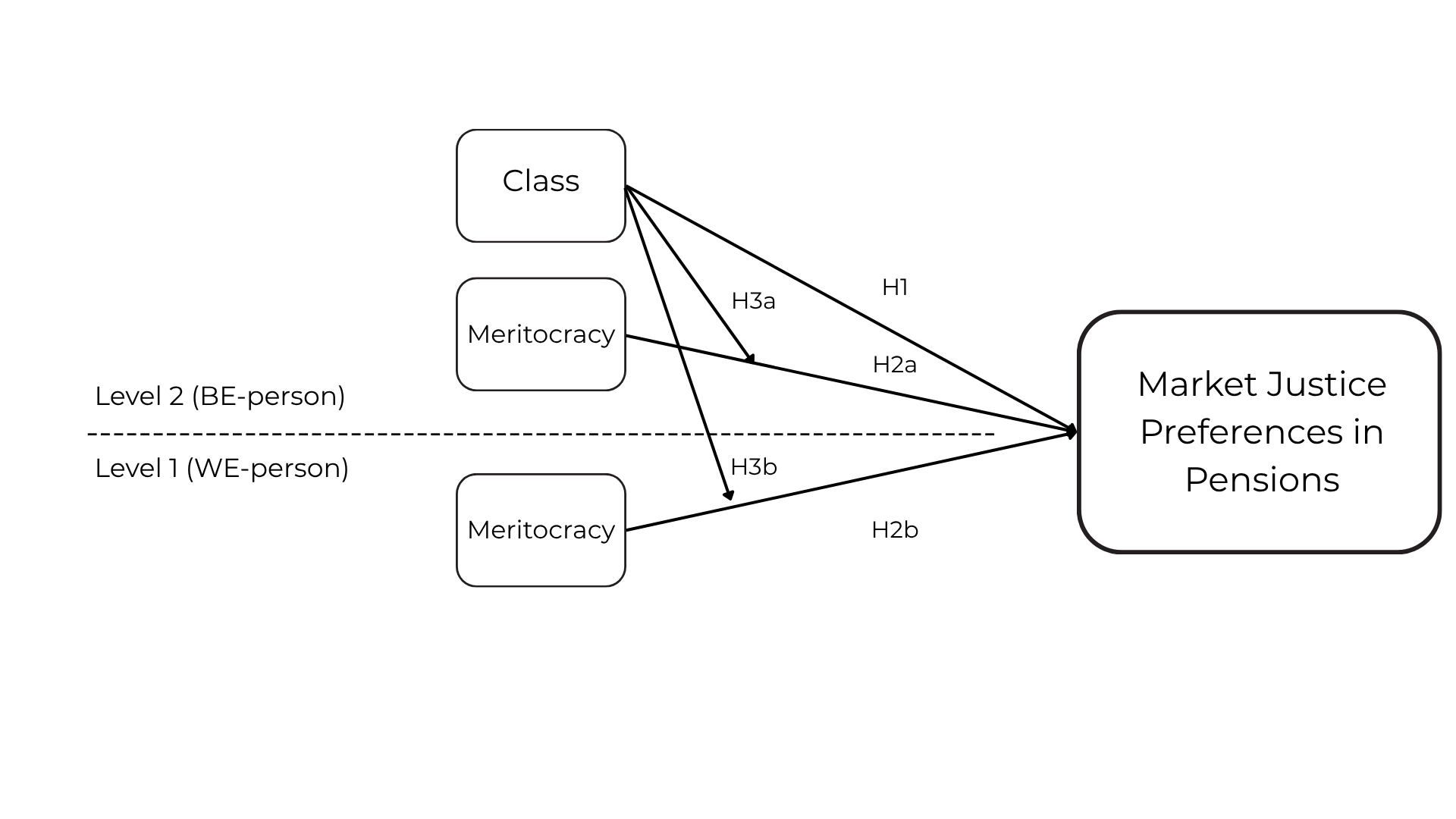
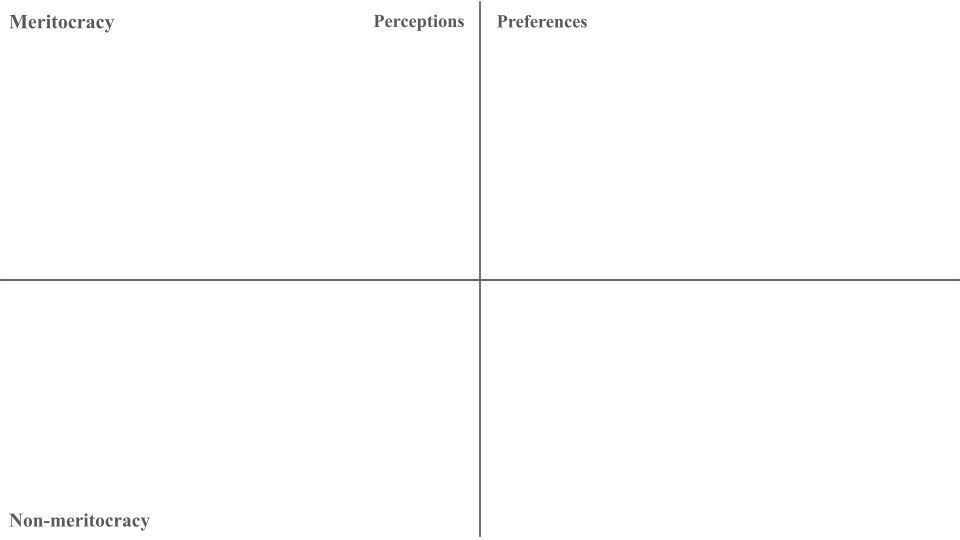
Hypotheses

Figure 1: Hypotheses diagram

Methodology

Data

  • ELSOC (COES): a representative panel survey of the urban adult population in Chile, based on a probabilistic, stratified, clustered, and multistage sampling design across large and small cities

  • Period: six waves (2016, 2017, 2018, 2019, 2022, and 2023)

  • Attrition 2016→2023: ~ 40%

  • Analytical sample (balanced 6-wave panel):

    • N = 7,522 observations (level 1) nested within
    • N = 1,317 individuals (level 2)

Dependent variable

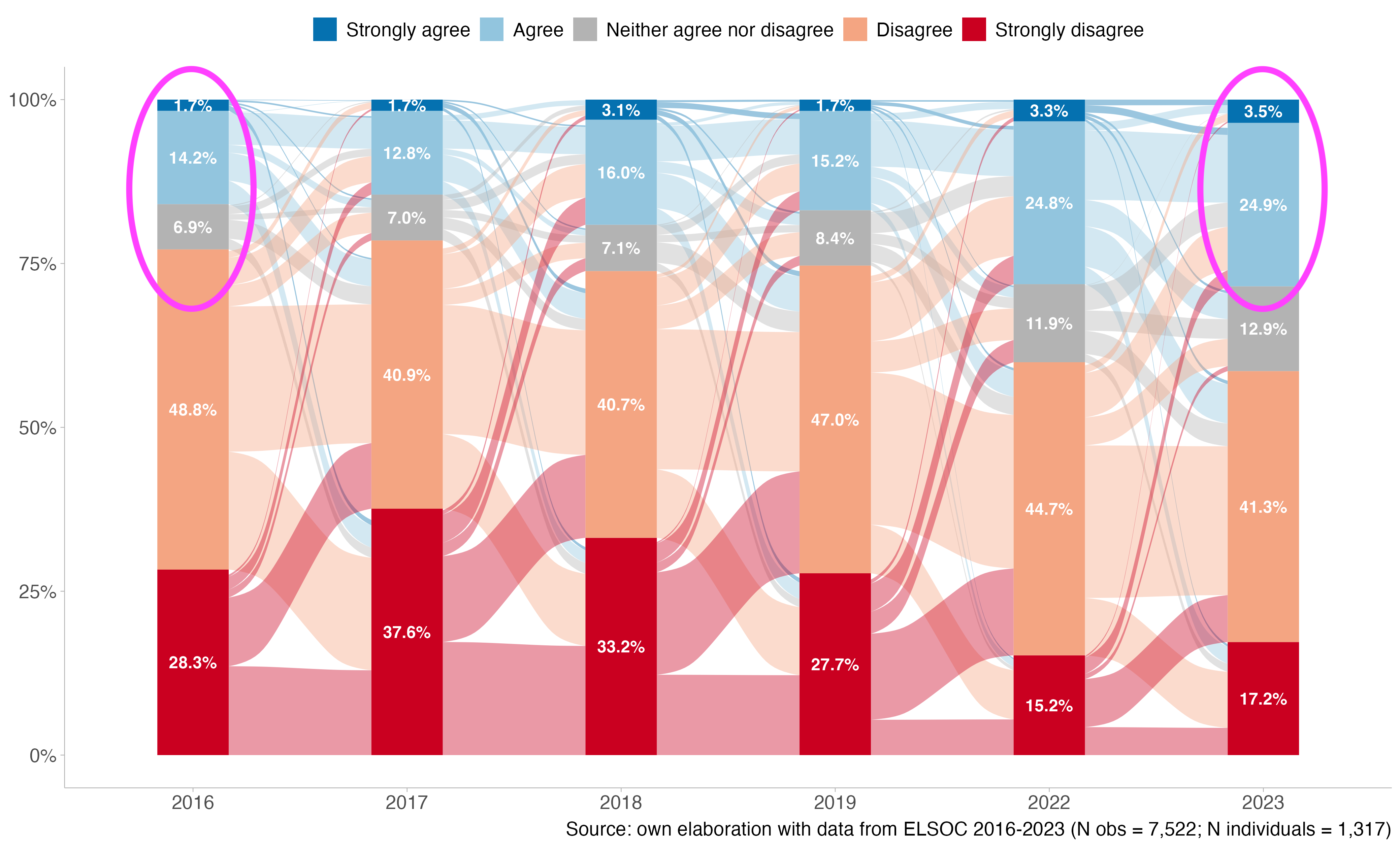
  • Item: ¿“It is fair that people with higher incomes have better pensions than people with lower incomes?”
Figure 2: Distribution of responses for preferences for market justice in pensions in Chile (2016–2023)

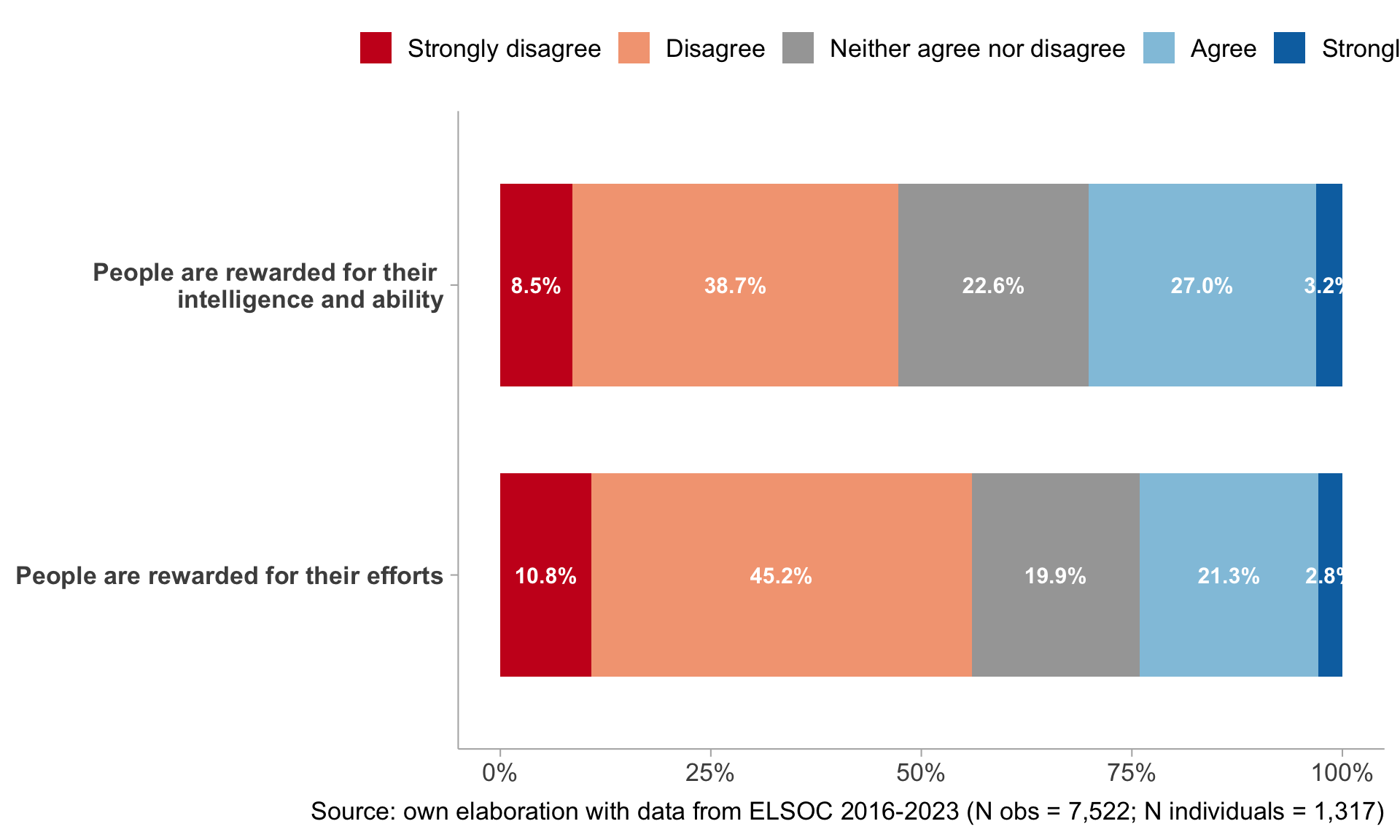
Independent variables: Level 1

Figure 3: Distribution of responses for meritocracy items

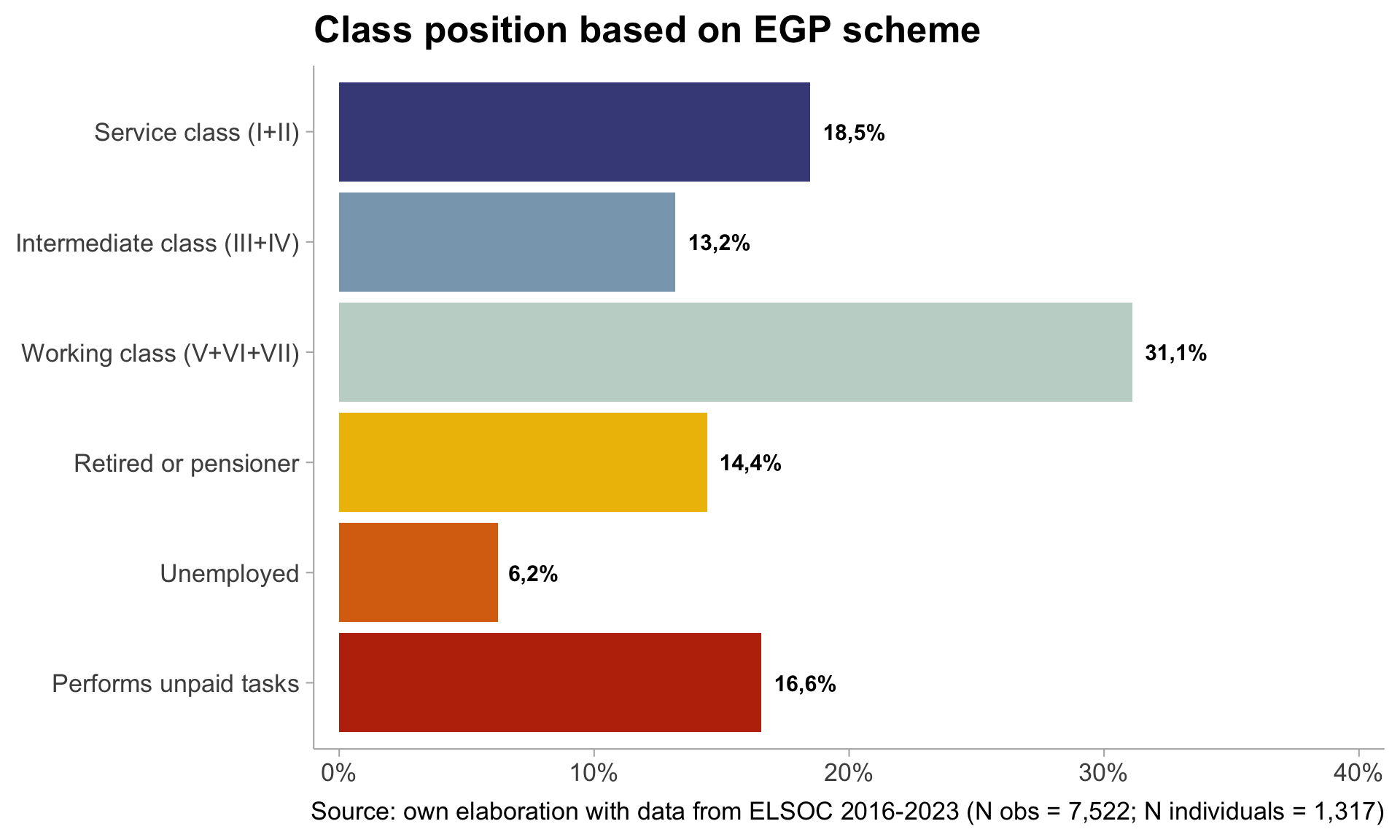
Independent variables: Level 2

Figure 4: Frecuency of class position
  • Fixed at the first wave (i.e., time-invariant) → captures average between-person differences (BE = \(\bar X_{i}\))

Estimation strategy

Cumulative link mixed models (CLMM):

  • Panel structure: repeated observations (level 1) nested within individuals (level 2)

  • Models both within-person (WE) and between-person (BE) effects; includes random effects (intercept and time slope)

  • WE/BE decomposition (person-mean centering) (Bell et al., 2019):

    • Within: \(X^{WE}_{it}= X_{it}-\bar{X}_i\)
    • Between: \(X^{BE}_{i}=\bar{X}_i\)
  • Formally:

\[\begin{aligned} \eta_{it} = \beta_{0}+ \beta_{1}\,\text{Time}_{it} +\beta_2\,\text{Meritocracy}^{WE}_{it} +\beta_3\,\text{Meritocracy}^{BE}_{i} +\beta_4\,\mathrm{Class}^{BE}_i + \end{aligned}\]

\[\beta_5\,(\mathrm{Class}^{BE}_i\!\times\! \text{Meritocracy}^{WE}_{it}) +\beta_6\,(\mathrm{Class}^{BE}_i\!\times\! \text{Meritocracy}^{BE}_{i}) +u_{0i}+u_{1i}\,\text{Time}_{it}\\\]

Results

Models

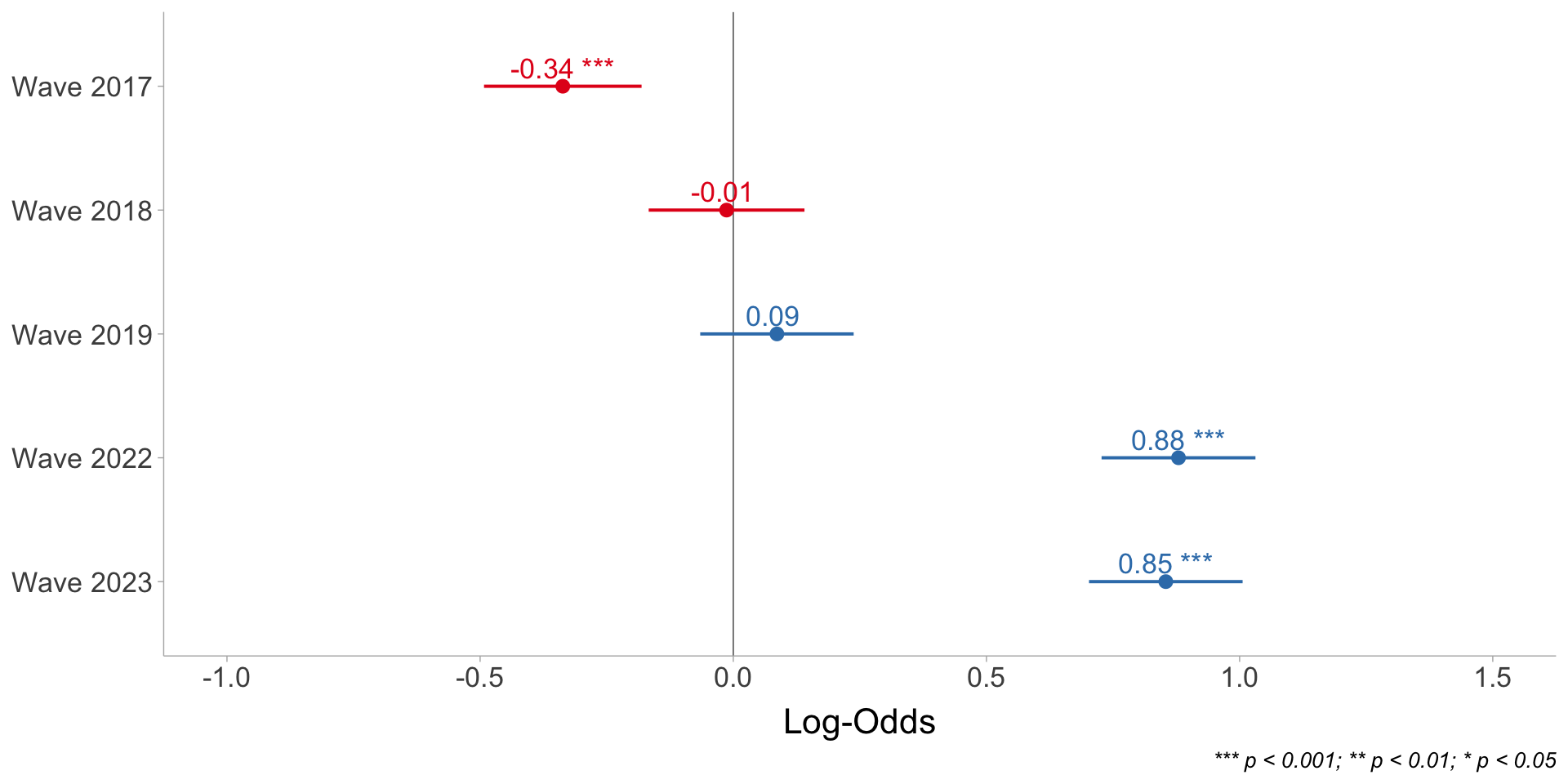
Figure 5: Changes across waves in market justice preferences in pensions
  • ICC = 0.23 between, 0.77 within

Models

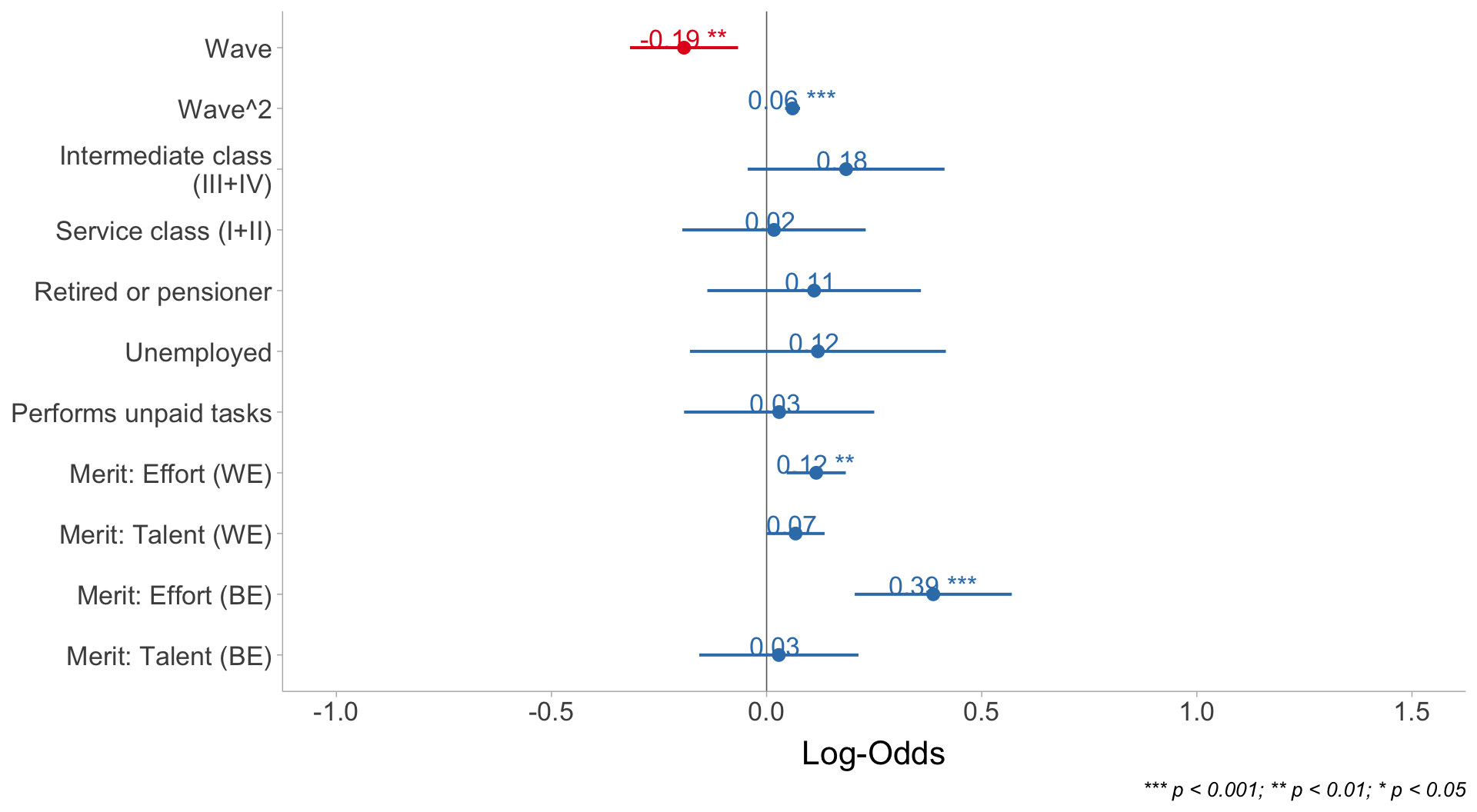
Figure 6: Main within- and between-person effects on market justice preferences in pensions
  • All models control for: gender, age, educational level, and political identification

Models

Figure 7: Predicted probabilities of pension market justice preferences by talent-based meritocratic perceptions and social class

Preliminary conclusions

  1. Time: Preferences for market justice in pensions have increased in recent years in Chile

  2. Social class: Higher social classes don’t exhibit greater support for market justice in pensions than lower classes (H1) (Busemeyer & Iversen, 2020; Kerner, 2020; Lindh, 2015)

  3. Meritocracy: The belief that effort is rewarded is associated with higher support for market justice in pensions (H2a and H2b) (Castillo et al., 2025)

  4. Class × Meritocracy: There is no evidence of an amplification effect (H3a/H3b)

Caveats

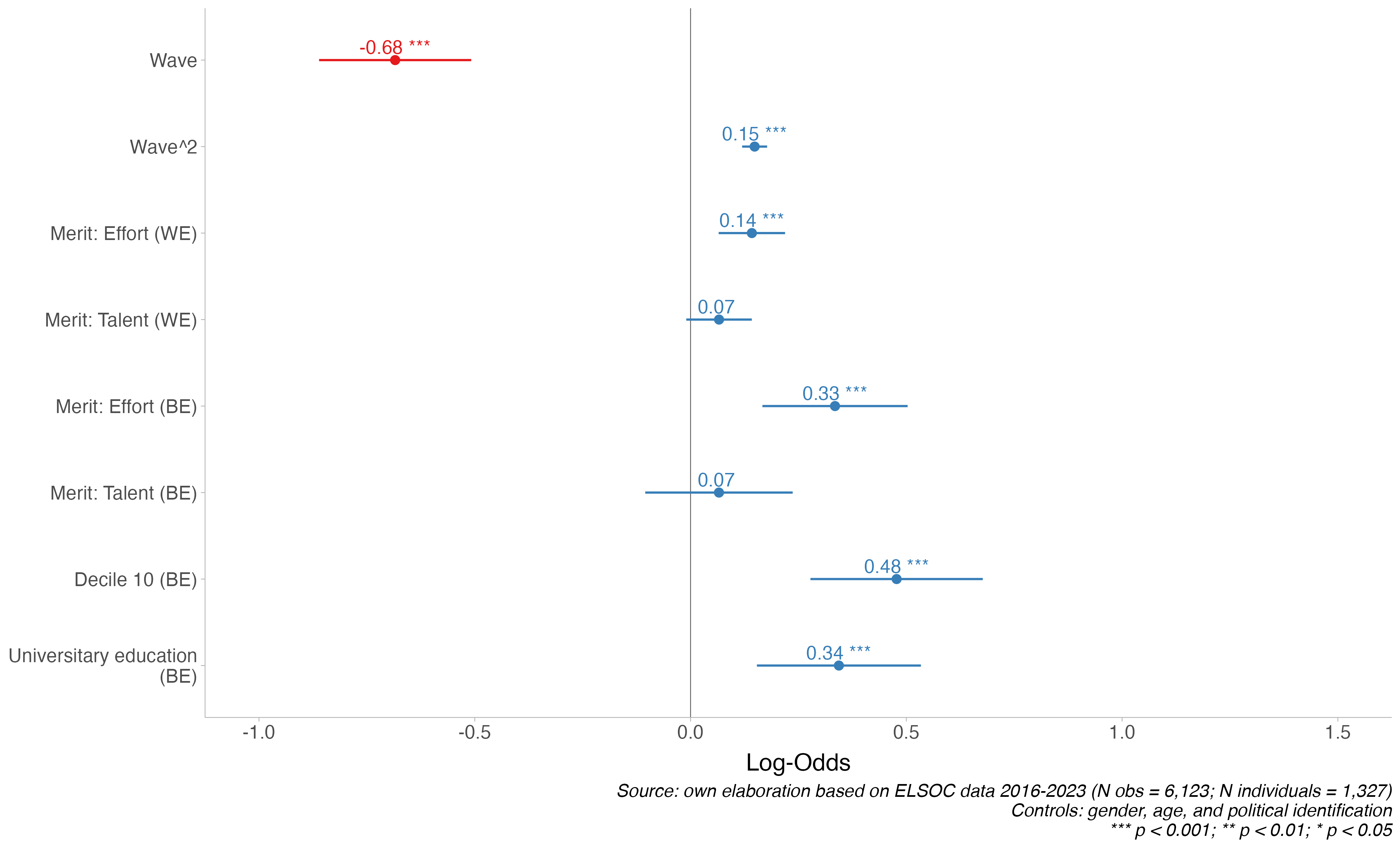
  • No evidence of class differences in support for pension market justice, but what about a more direct measure of stratification differences?

  • Meritocratic beliefs show a strong and consistent effect. Yet, are measured in a highly reduced way, through effort and talent only

  • Next step: model meritocracy as a multidimensional construct
    (Castillo et al., 2023)

The role of income and education

Figure 8: Main within- and between-person effects on market justice preferences in pension

Additional analyses (SEM)

Data

  • EDUMERCO: Online survey (CAWI), fielded in 2025, with adult respondents from the Metropolitan Region of Chile

  • Non-probability sample with quota-based design
    → approximating population parameters by age, gender, education, and socioeconomic status

  • Total sample: N = 3,470

  • Analytical sample: N = 2,557

Measures

Castillo et al. (2023) measurement model

Measures

Castillo et al. (2023) measurement model

Measures

Castillo et al. (2023) measurement model

Measures

Castillo et al. (2023) measurement model

Measures

Castillo et al. (2023) measurement model

Analytical strategy

  • First, we estimate a Confirmatory Factor Analysis of the multidimensional meritocracy scale
    → good model fit (CFI = 0.995, TLI = 0.991, RMSEA = 0.048)

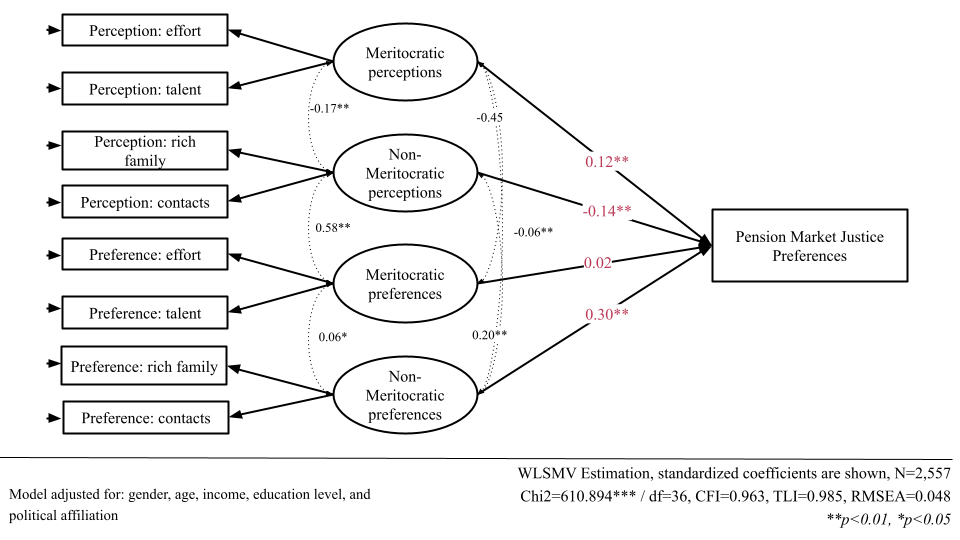
  • Second, we estimate a Structural Equation Model
    → pension market justice regressed on latent meritocracy factors

\[ \text{MJP}_{i} = \alpha + \beta_1 \eta^{PM}_{i} + \beta_2 \eta^{PNM}_{i} + \beta_3 \eta^{PrM}_{i} + \beta_4 \eta^{PrNM}_{i} + \gamma'X_i + \varepsilon_i \]

  • Estimation: WLSMV
    → appropriate for ordinal (Likert-type) data (Kline, 2023)

Results

Descriptive

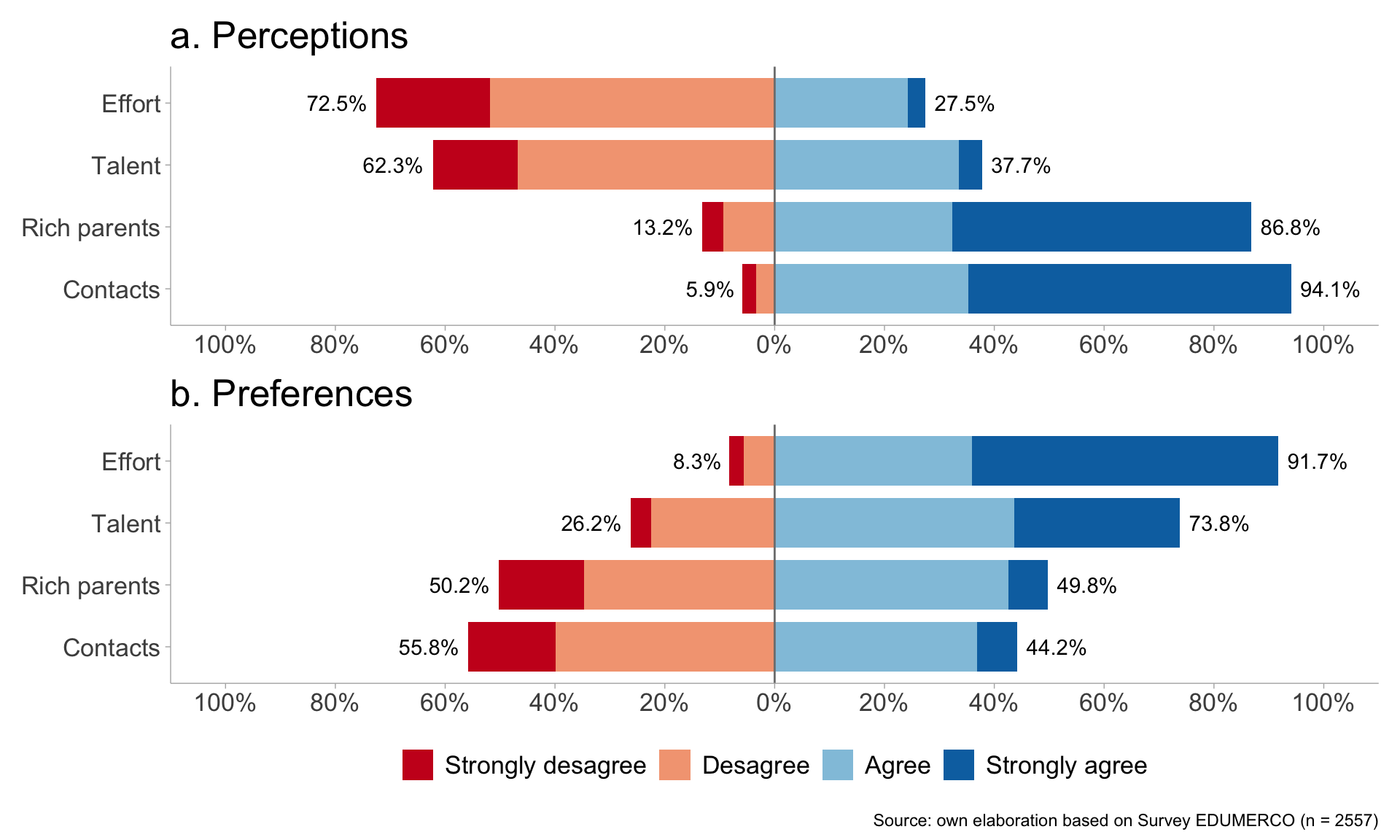
Figure 9: Distribution of responses on the scale of perceptions and preferences regarding meritocracy

Model

Figure 10: Structural equation model

Preliminary conclusions

  1. Meritocracy in Chile: Privilege is perceived to outweigh merit, even though merit—especially effort—remains the dominant normative ideal

  2. Measuring meritocracy: Respondents distinguish between perceptions and preferences, as well as between meritocratic and non-meritocratic principles

  3. Meritocracy and pension market justice: Support is strongest among those willing to normalize privilege within a fair distributive order

Discussion and conclusions

Discussion and conclusions

  1. Research agenda: The expansion of market-based welfare is reflected in public attitudes (Busemeyer & Iversen, 2020; Lindh, 2015), helping explain support for neoliberal arrangements (Mau, 2015)

  2. Chile: Support remains minority but is rising over time, consistent with longitudinal evidence from a highly commodified welfare context marked by mixed policy feedback (Castillo et al., 2025)

  3. Main result: Effort-based meritocratic perceptions are positively associated with pension market justice, both between and within individuals

  4. Extension: With a multidimensional measure of meritocracy (Castillo et al., 2023), support is highest among those who normatively accept non-meritocratic advantage, while perceiving society as non-meritocratic lowers it

Next steps

  • Market justice measurement: We are refining the measure and extending it to additional welfare domains

  • Class measurement: Despite the null findings, we do not abandon the argument that objective stratification shapes these preferences; we will test alternative measures of class and inequality

  • Next analyses: We will further examine how meritocratic deservingness relates to market justice in pensions, health, and education using latent class analysis and comparative ISSP data, with attention to institutional and economic cross-national differences

Thank you for your attention

References

Bell, A., Fairbrother, M., & Jones, K. (2019). Fixed and random effects models: Making an informed choice. Quality & Quantity, 53(2), 1051–1074. https://doi.org/10.1007/s11135-018-0802-x
Boccardo, G. (2020). 30 años de privatizaciones en Chile: Lo que la pandemia reveló. Nodo XXI.
Busemeyer, M. (2015). Skills and inequality: Partisan politics and the political economy of education reforms in western welfare states. Cambridge: Cambridge University Press. https://doi.org/10.1017/CBO9781107477650
Busemeyer, M., & Iversen, T. (2020). The Welfare State with Private Alternatives: The Transformation of Popular Support for Social Insurance. The Journal of Politics, 82(2), 671–686. https://doi.org/10.1086/706980
Campbell, J. L. (2020). Institutional Change and Globalization. Princeton University Press. https://doi.org/10.2307/j.ctv131bw68
Canales Cerón, M., Orellana Calderón, V. S., & Guajardo Mañán, F. (2021). Sujeto y cotidiano en la era neoliberal: El caso de la educación chilena. Revista Mexicana de Ciencias Políticas y Sociales, 67(244). https://doi.org/10.22201/fcpys.2448492xe.2022.244.70386
Castillo, J. C., Iturra, J., Maldonado, L., Atria, J., & Meneses, F. (2023). A Multidimensional Approach for Measuring Meritocratic Beliefs: Advantages, Limitations and Alternatives to the ISSP Social Inequality Survey. International Journal of Sociology, 53(6), 448–472. https://doi.org/10.1080/00207659.2023.2274712
Castillo, J. C., Laffert, A., Carrasco, K., & Iturra-Sanhueza, J. (2025). Perceptions of inequality and meritocracy: Their interplay in shaping preferences for market justice in Chile (2016–2023). Frontiers in Sociology, 10, 1634219. https://doi.org/10.3389/fsoc.2025.1634219
Fernandez, J. J., & Jaime-Castillo, A. M. (2013). Positive or Negative Policy Feedbacks? Explaining Popular Attitudes Towards Pragmatic Pension Policy Reforms. European Sociological Review, 29(4), 803–815. https://doi.org/10.1093/esr/jcs059
Ferre, J. C. (2023). Welfare regimes in twenty-first-century Latin America. Journal of International and Comparative Social Policy, 39(2), 101–127. https://doi.org/10.1017/ics.2023.16
Flores, I., Sanhueza, C., Atria, J., & Mayer, R. (2020). Top Incomes in Chile: A Historical Perspective on Income Inequality, 1964–2017. Review of Income and Wealth, 66(4), 850–874. https://doi.org/10.1111/roiw.12441
Gingrich, J. R. (2011). Making Markets in the Welfare State: The Politics of Varying Market Reforms (1st ed.). Cambridge University Press. https://doi.org/10.1017/CBO9780511791529
Immergut, E. M., & Schneider, S. M. (2020). Is it unfair for the affluent to be able to purchase “better” healthcare? Existential standards and institutional norms in healthcare attitudes across 28 countries. Social Science & Medicine, 267, 113146. https://doi.org/10.1016/j.socscimed.2020.113146
Kerner, A. (2020). Pension Returns and Popular Support for Neoliberalism in Post-Pension Reform Latin America. British Journal of Political Science, 50(2), 585–620. https://doi.org/10.1017/S0007123417000710
Kline, R. B. (2023). Principles and Practice of Structural Equation Modeling. Guilford Publications.
Kluegel, J., Mason, D., & Wegener, B. (1999). The Legitimation of Capitalism in the Postcommunist Transition: Public Opinion about Market Justice, 1991-1996. European Sociological Review, 15(3), 33. Retrieved from https://www.jstor.org/stable/522731
Koos, S., & Sachweh, P. (2019). The moral economies of market societies: Popular attitudes towards market competition, redistribution and reciprocity in comparative perspective. Socio-Economic Review, 17(4), 793–821. https://doi.org/10.1093/ser/mwx045
Lane, R. E. (1986). Market Justice, Political Justice. American Political Science Review, 80(2), 383–402. https://doi.org/10.2307/1958264
Lee, J.-S., & Stacey, M. (2024). Fairness perceptions of educational inequality: The effects of self-interest and neoliberal orientations. The Australian Educational Researcher, 51(4), 1215–1237. https://doi.org/10.1007/s13384-023-00636-6
Lindh, A. (2015). Public Opinion against Markets? Attitudes towards Market Distribution of Social ServicesA Comparison of 17 Countries. Social Policy & Administration, 49(7), 887–910. https://doi.org/10.1111/spol.12105
Llorca-Jaña, M., & Miller, R. M. D. (2021). Historia económica de Chile desde la independencia. Santiago de Chile: RIL editores.
López-Roldán, P., & Fachelli, S. (Eds.). (2021). Towards a Comparative Analysis of Social Inequalities between Europe and Latin America. Cham: Springer International Publishing. https://doi.org/10.1007/978-3-030-48442-2
Madariaga, A. (2020). The three pillars of neoliberalism: Chile’s economic policy trajectory in comparative perspective. Contemporary Politics, 26(3), 308–329. https://doi.org/10.1080/13569775.2020.1735021
Mau, S. (2015). Inequality, Marketization and the Majority Class: Why Did the European Middle Classes Accept Neo-Liberalism? London: Palgrave Macmillan UK.
Somma, N. M., Bargsted, M., Disi Pavlic, R., & Medel, R. M. (2021). No water in the oasis: The Chilean Spring of 2019–2020. Social Movement Studies, 20(4), 495–502. https://doi.org/10.1080/14742837.2020.1727737
Streeck, W. (2016). How will capitalism end? Essays on a failing system. London New York, NY: Verso.
Superintendencia, de P. (2025). Cuadros de afiliación a AFP.
Svallfors, S. (Ed.). (2007). The Political Sociology of the Welfare State: Institutions, Social Cleavages, and Orientations (1st ed.). Stanford University Press. https://doi.org/10.2307/j.ctvr0qv0q
Torche, F. (2014). Intergenerational Mobility and Inequality: The Latin American Case. Annual Review of Sociology, 40(1), 619–642. https://doi.org/10.1146/annurev-soc-071811-145521

Supplementary Material

Bivariate

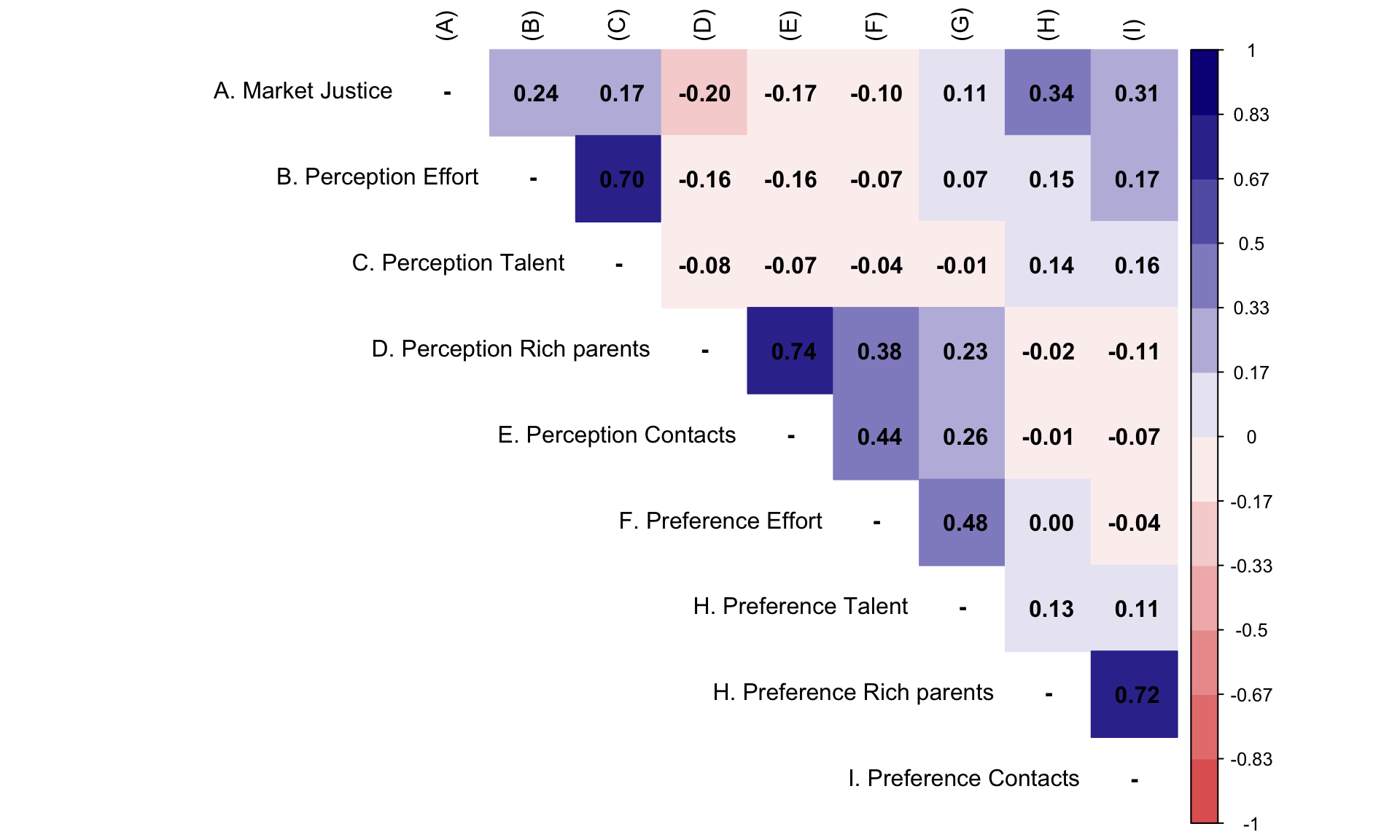
Figure 11: Correlation matrix between market justice and meritocracy scale

MIMIC Model: Education

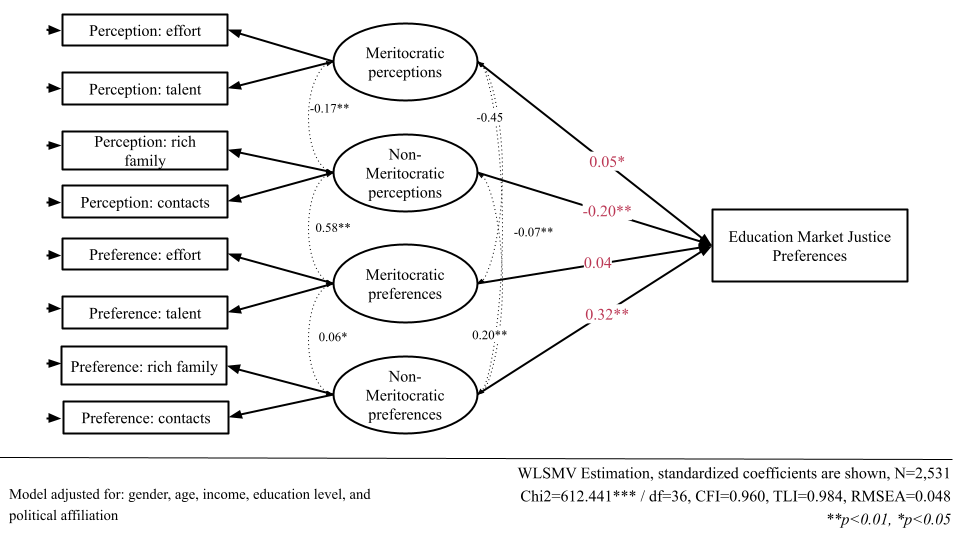
Figure 12: MIMIC Model for market justice preferences in education

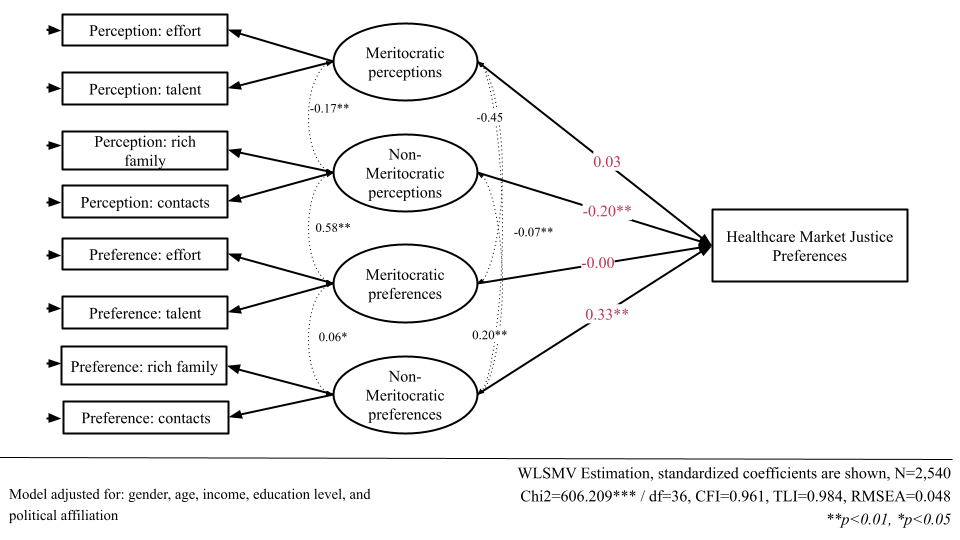
MIMIC Model: Healthcare

Figure 13: MIMIC Model for market justice preferences in healthcare