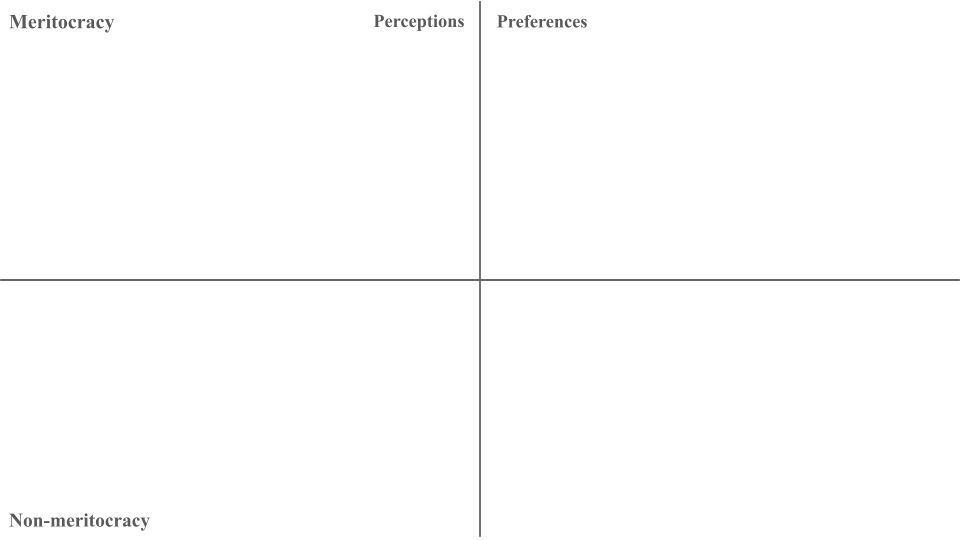
Market justice, meritocracy & deservingness

Agenda & work in progress


Juan Carlos Castillo, Andreas Laffert &
Tomás Urzúa

Project: Market Justice and Deservingness of Social Welfare (ANID/FONDECYT N°1250518 2025-2028)

Department of Sociology, University of Chile


Freie Universität Berlin - April 2026

Contents

  • The project
  • Paper market justice in pensions
  • Paper factorial invariance of merit scale
  • Latent Class Analysis of merit scale

Contents

  • The project
  • Paper market justice in pensions
  • Paper factorial invariance of merit scale
  • Latent Class Analysis of merit scale

Project

  • ANID/FONDECYT N°1250518 2025-2028 - Market Justice and Deservingness of Social Welfare

  • Objective: Analyze market justice preferences in Chile, their evolution over time, and their relation to welfare deservingness

  • Main argument: Chile’s highly commodified welfare system strengthens meritocratic deservingness beliefs, thereby increasing preferences for market justice relative to less commodified contexts

  • Research design:

    • Comparative and longitudinal data analysis
    • Original survey
    • Survey experiments
    • Legislative debates on pensions

Team

Juan Carlos Castillo (PI)
Andreas Laffert (RA)
Tomás Urzúa (RA)
René Canales (RA)

Agenda

Peer-reviewed Articles

  • Castillo, J. C., Canales Sellés, R., Laffert, A., & Urzúa, T. (2026). Justification trajectories for pension inequality in Chile (2016–2023): the role of social class and beliefs in meritocracy. Frontiers in Sociology, 11, 1771856. https://doi.org/10.3389/fsoc.2026.1771856
  • Castillo, J. C., Laffert, A., Carrasco, K., & Iturra-Sanhueza, J. (2025). Perceptions of inequality and meritocracy: their interplay in shaping preferences for market justice in Chile (2016–2023). Frontiers in Sociology, 10, 1634219. https://doi.org/10.3389/fsoc.2025.1634219

  • Castillo, J. C., Salgado, M., Carrasco, K., & Laffert, A. (2024). The Socialization of Meritocracy and Market Justice Preferences at School. Societies, 14(11), 214. doi.org/10.3390/soc14110214

Forthcoming

  • Pensions’ market justice and meritocracy: A structural equation modeling approach. Andreas Laffert, Tomás Urzúa, Juan Carlos Castillo & René Canales.
  • Stability and comparability of meritocratic beliefs in school-age students: A measurement invariance approach across time and cohorts. Andreas Laffert, Juan Carlos Castillo, René Canales, Tomás Urzúa & Kevin Carrasco. Submited.

  • Inequality and deservingness in higher education in Chile. A conjoint survey experiment. Juan Carlos Castillo, Andreas Laffert, René Canales & Tomás Urzúa.

Contents

  • The project
  • Paper market justice in pensions
  • Paper factorial invariance of merit scale
  • Latent Class Analysis of merit scale

The problem

  1. Privatization and marketization of public goods, welfare policies, and social services (Gingrich, 2011; Streeck, 2016)
  1. Changes in the institutional architecture of the welfare state; expansion of market logics (Busemeyer & Iversen, 2020; Ferre, 2023)
  1. This economic order is reflected in a specific moral economy and policy feedback dynamics (Campbell, 2020; Fernandez & Jaime-Castillo, 2013; Mau, 2015)

The Chilean case

Market justice preferences

  • Lane (1986): market justice vs. political justice

  • Normative beliefs that legitimize the idea that access to essential social services—such as healthcare, education, or pensions—should be determined by market-based criteria (Lindh, 2015, p. 895)

  • Measurement: assessing whether individuals consider it fair that access to these services depends on income (Castillo et al., 2025; Kluegel et al., 1999; Lindh, 2015)

Factors associated with market justice

Individual

Contextual

This study


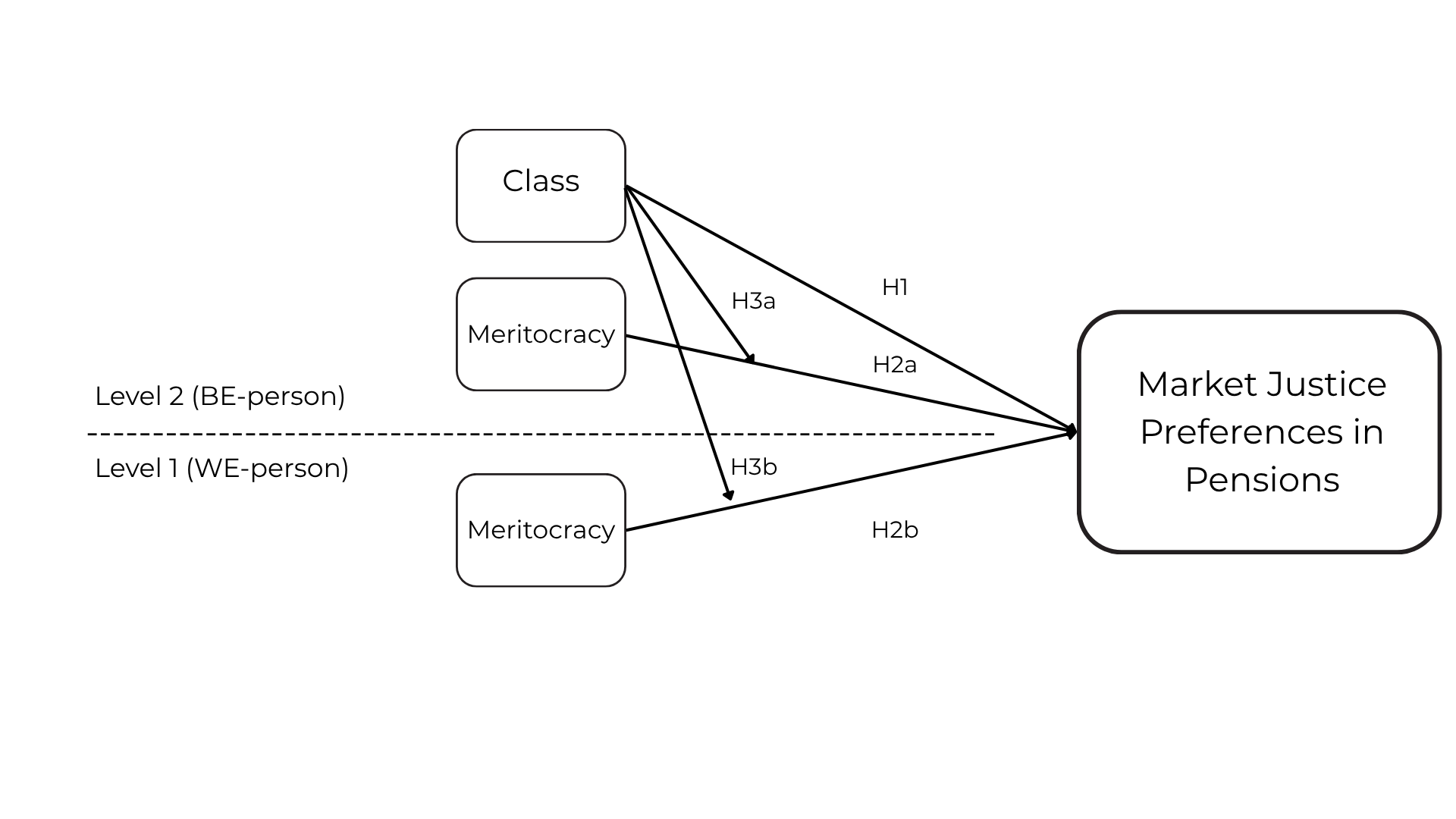
Analyze the relationship between social class and preferences for market justice in pensions in Chile, and how these evolve over time


Examine the role of meritocracy in shaping the relationship between class and preferences for pension market justice

Hypotheses

Figure 1: Hypotheses diagram

Methodology

Data

  • ELSOC (COES): a representative panel survey of the urban adult population in Chile, based on a probabilistic, stratified, clustered, and multistage sampling design across large and small cities

  • Period: six waves (2016, 2017, 2018, 2019, 2022, and 2023)

  • Attrition 2016→2023: ~ 40%

  • Analytical sample (balanced 6-wave panel):

    • N = 7,522 observations (level 1) nested within
    • N = 1,317 individuals (level 2)

Dependent variable

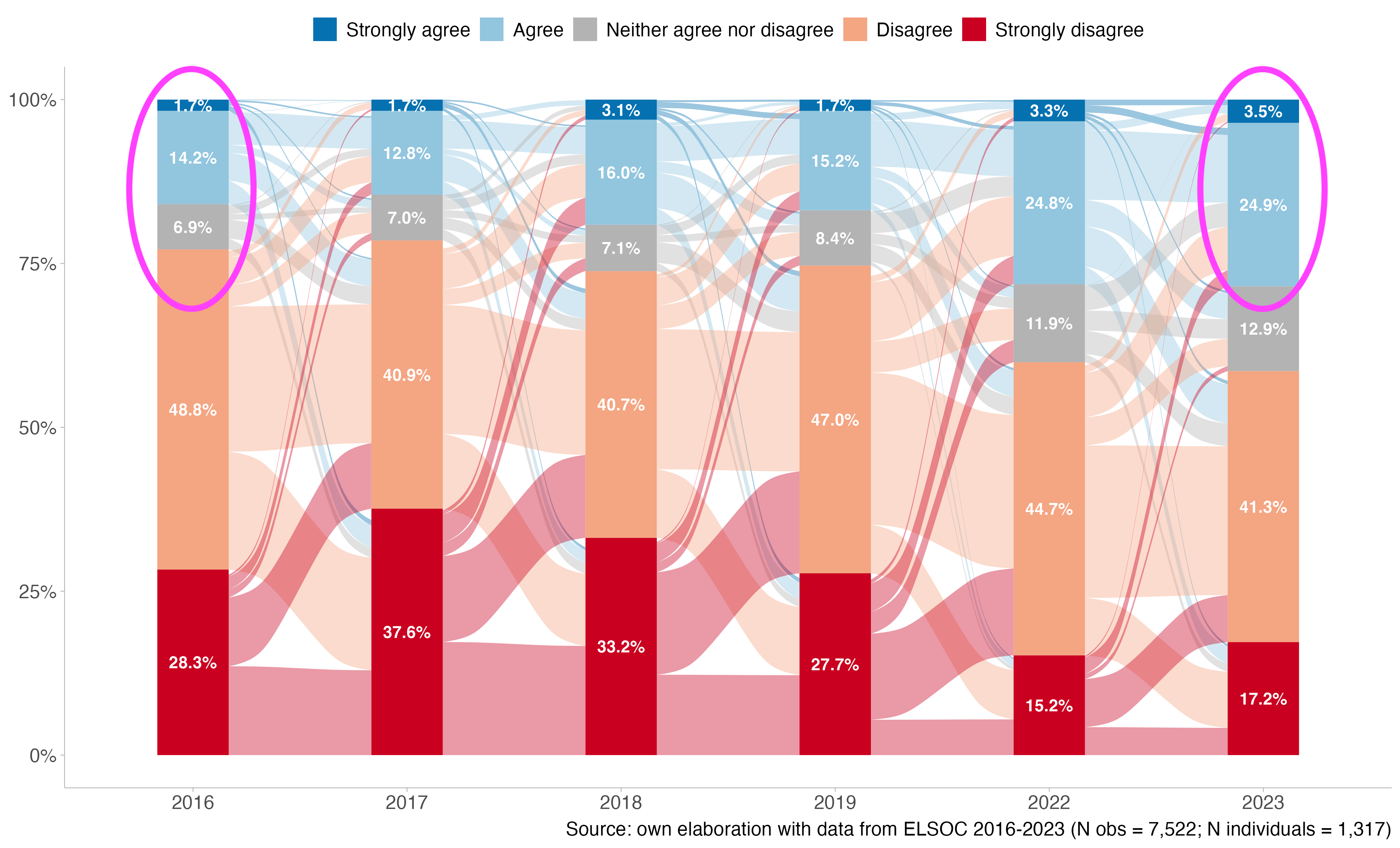
  • Item: ¿“It is fair that people with higher incomes have better pensions than people with lower incomes?”
Figure 2: Distribution of responses for preferences for market justice in pensions in Chile (2016–2023)

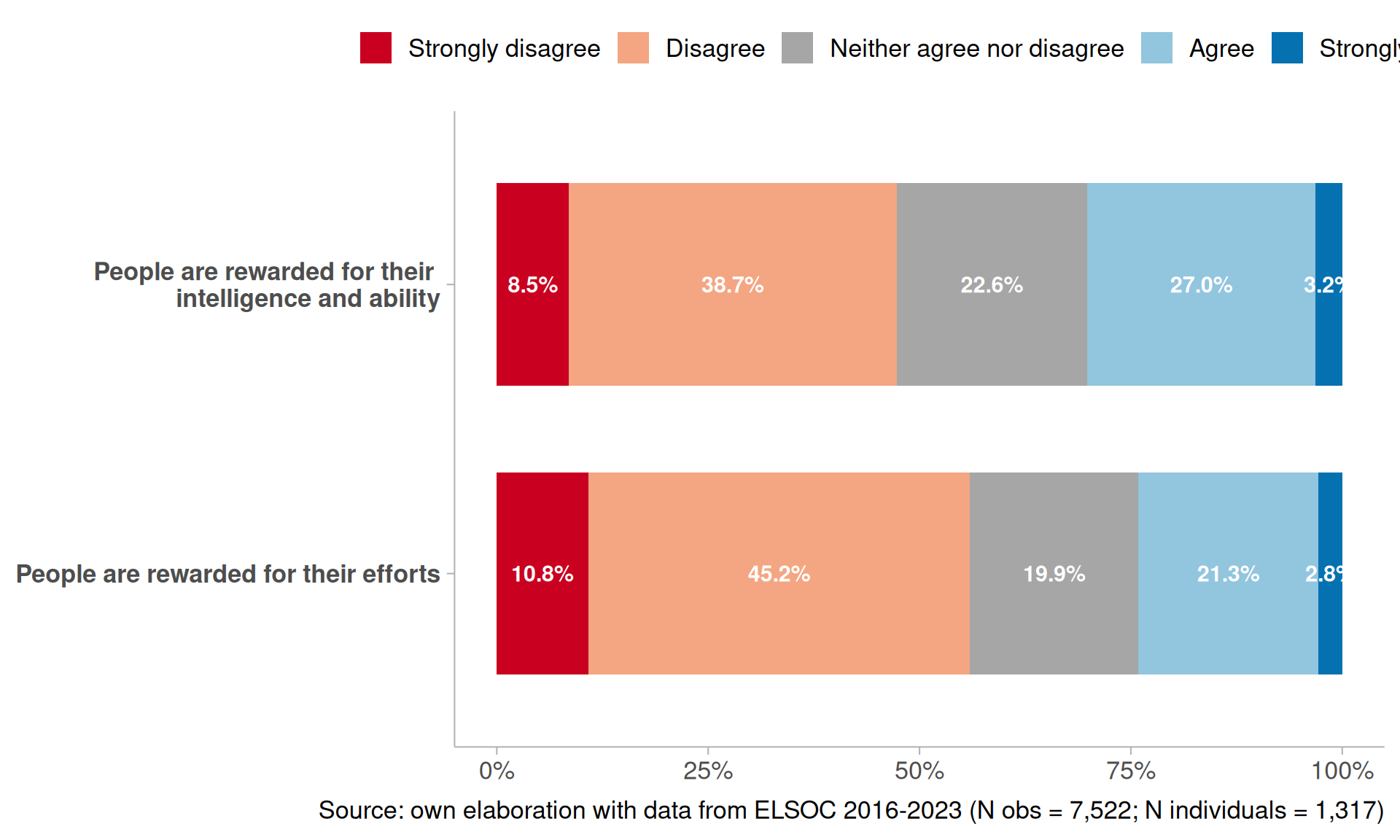
Independent variables: Level 1

Figure 3: Distribution of responses for meritocracy items

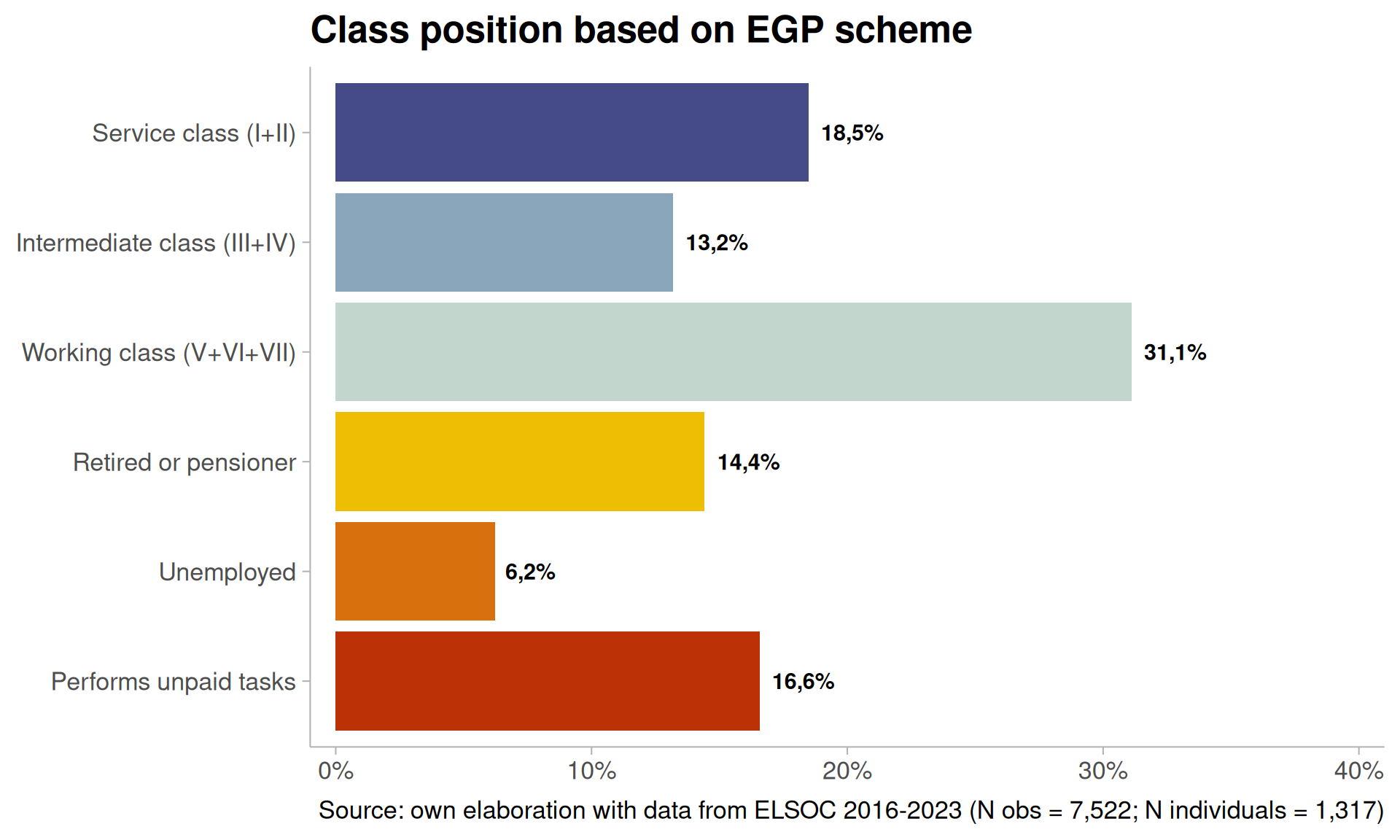
Independent variables: Level 2

Figure 4: Frecuency of class position
  • Fixed at the first wave (i.e., time-invariant) → captures average between-person differences (BE = \(\bar X_{i}\))

Estimation strategy

Cumulative link mixed models (CLMM):

  • Panel structure: repeated observations (level 1) nested within individuals (level 2)

  • Models both within-person (WE) and between-person (BE) effects; includes random effects (intercept and time slope)

  • WE/BE decomposition (person-mean centering) (A. Bell et al., 2019):

    • Within: \(X^{WE}_{it}= X_{it}-\bar{X}_i\)
    • Between: \(X^{BE}_{i}=\bar{X}_i\)
  • Formally:

\[\begin{aligned} \eta_{it} = \beta_{0}+ \beta_{1}\,\text{Time}_{it} +\beta_2\,\text{Meritocracy}^{WE}_{it} +\beta_3\,\text{Meritocracy}^{BE}_{i} +\beta_4\,\mathrm{Class}^{BE}_i + \end{aligned}\]

\[\beta_5\,(\mathrm{Class}^{BE}_i\!\times\! \text{Meritocracy}^{WE}_{it}) +\beta_6\,(\mathrm{Class}^{BE}_i\!\times\! \text{Meritocracy}^{BE}_{i}) +u_{0i}+u_{1i}\,\text{Time}_{it}\\\]

Results

Models

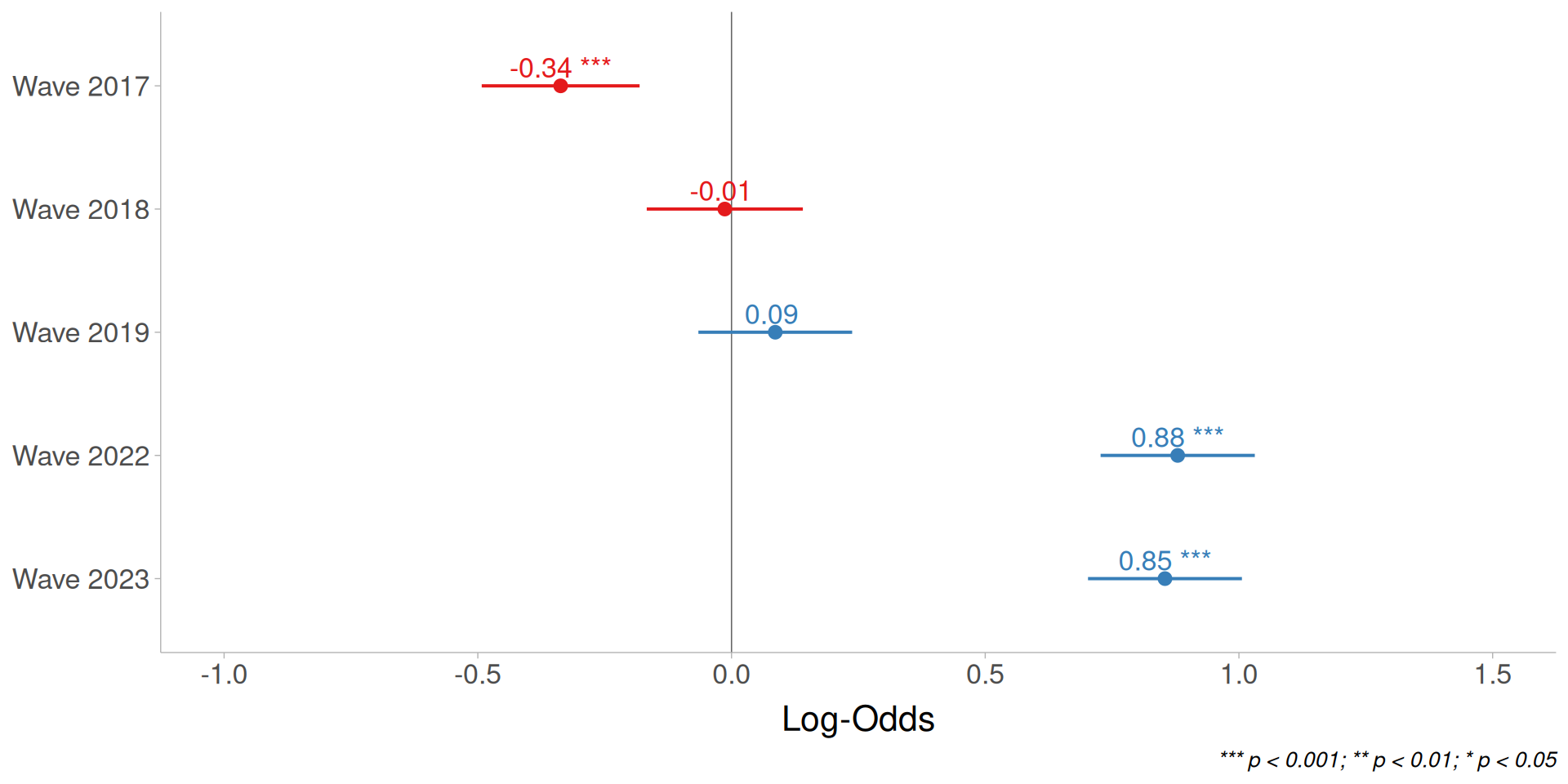
Figure 5: Changes across waves in market justice preferences in pensions
  • ICC = 0.23 between, 0.77 within

Models

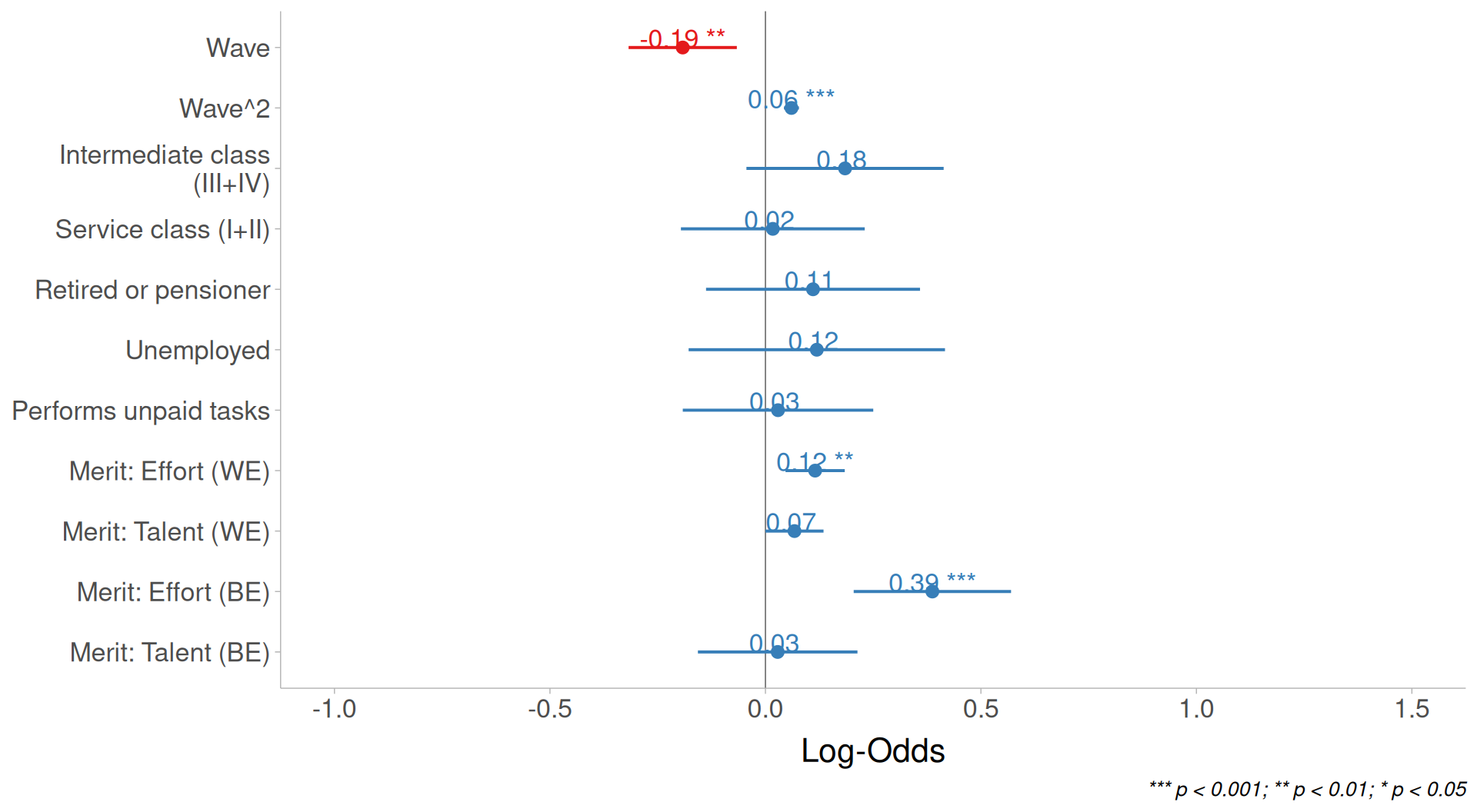
Figure 6: Main within- and between-person effects on market justice preferences in pensions
  • All models control for: gender, age, educational level, and political identification

Models

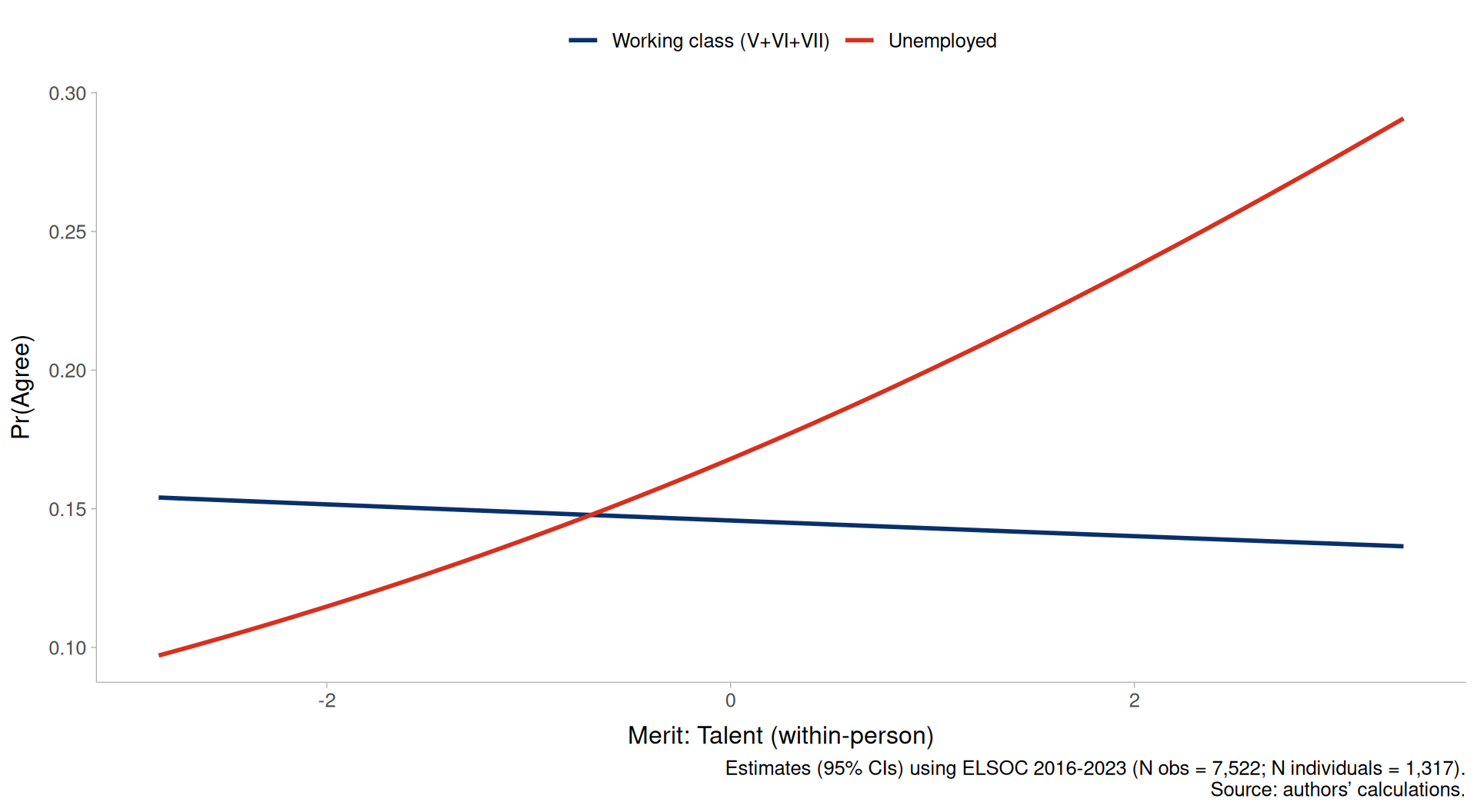
Figure 7: Predicted probabilities of pension market justice preferences by talent-based meritocratic perceptions and social class

Preliminary conclusions

  1. Time: Preferences for market justice in pensions have increased in recent years in Chile

  2. Social class: Higher social classes don’t exhibit greater support for market justice in pensions than lower classes (H1) (Busemeyer & Iversen, 2020; Kerner, 2020; Lindh, 2015)

  3. Meritocracy: The belief that effort is rewarded is associated with higher support for market justice in pensions (H2a and H2b) (Castillo et al., 2025)

  4. Class × Meritocracy: There is no evidence of an amplification effect (H3a/H3b)

Caveats

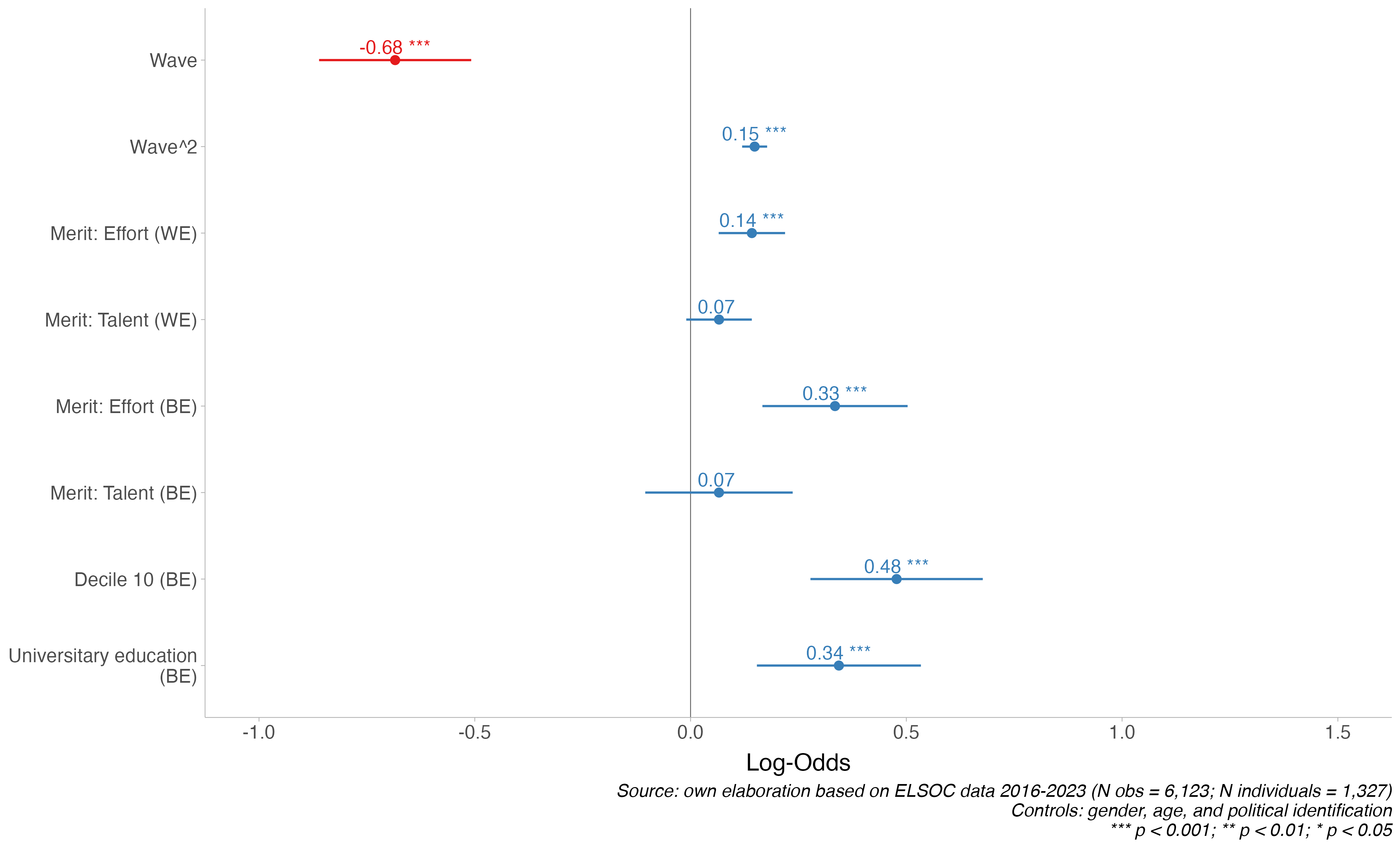
  • No evidence of class differences in support for pension market justice, but what about a more direct measure of stratification differences?

The role of income and education

Figure 8: Main within- and between-person effects on market justice preferences in pension

Caveats

  • Meritocratic beliefs show a strong and consistent effect. Yet, are measured in a highly reduced way, through effort and talent only

  • Next step: model meritocracy as a multidimensional construct
    (Castillo et al., 2023)

Additional analyses (SEM)

Data

  • EDUMERCO: Online survey (CAWI), fielded in 2025, with adult respondents from the Metropolitan Region of Chile

  • Non-probability sample with quota-based design
    → approximating population parameters by age, gender, education, and socioeconomic status

  • Total sample: N = 3,470

  • Analytical sample: N = 2,557

Measures

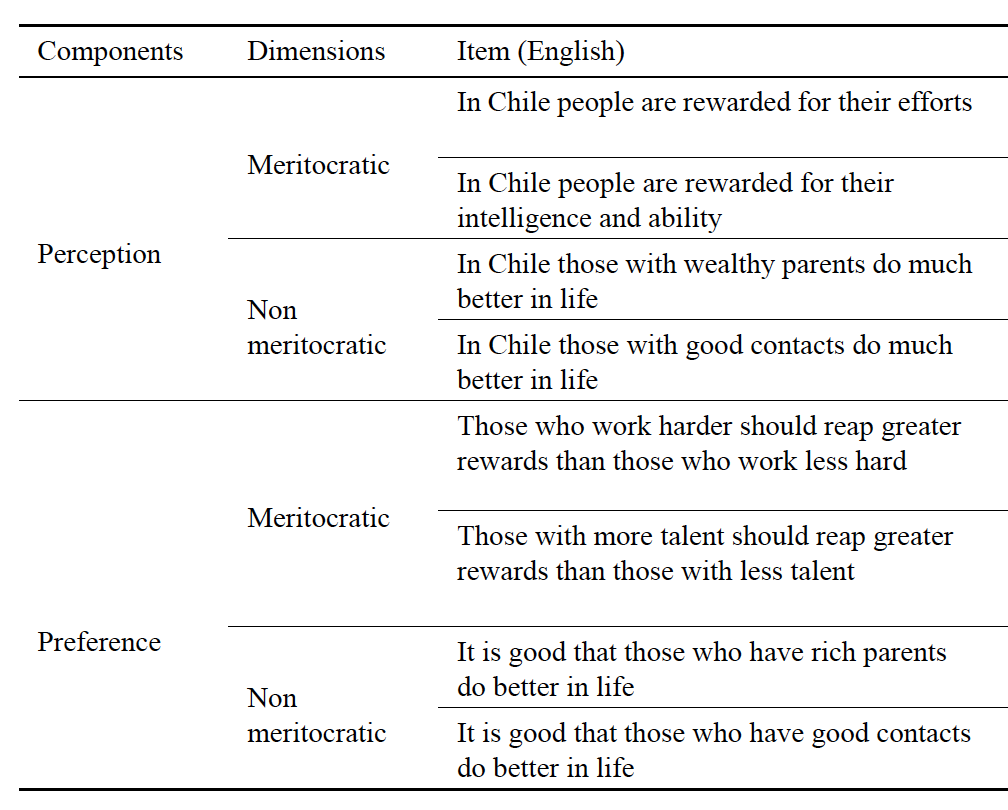
Castillo et al. (2023) measurement model

Measures

Castillo et al. (2023) measurement model

Measures

Castillo et al. (2023) measurement model

Measures

Castillo et al. (2023) measurement model

Measures

Castillo et al. (2023) measurement model

Analytical strategy

  • First, we estimate a Confirmatory Factor Analysis of the multidimensional meritocracy scale
    → good model fit (CFI = 0.995, TLI = 0.991, RMSEA = 0.048)

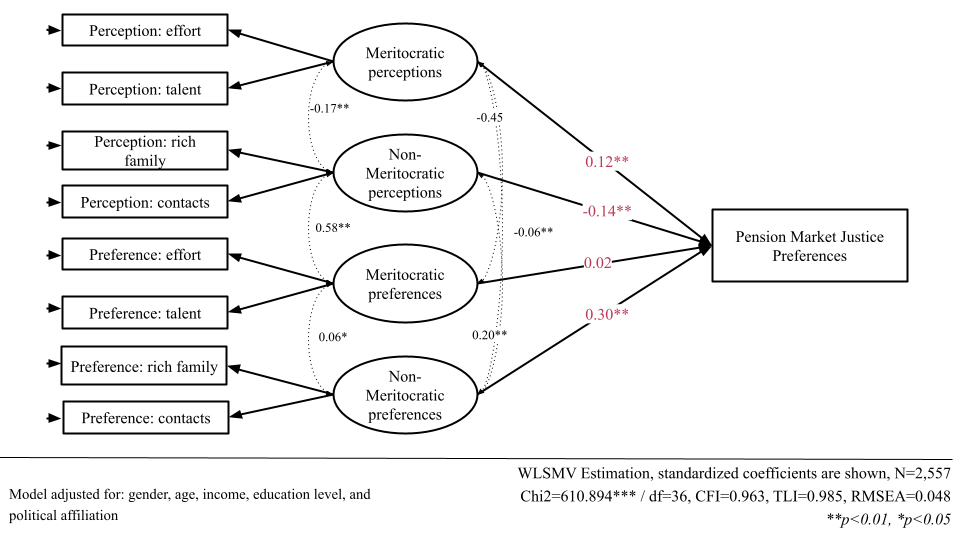
  • Second, we estimate a Structural Equation Model
    → pension market justice regressed on latent meritocracy factors

\[ \text{MJP}_{i} = \alpha + \beta_1 \eta^{PM}_{i} + \beta_2 \eta^{PNM}_{i} + \beta_3 \eta^{PrM}_{i} + \beta_4 \eta^{PrNM}_{i} + \gamma'X_i + \varepsilon_i \]

  • Estimation: WLSMV
    → appropriate for ordinal (Likert-type) data (Kline, 2023)

Results

Descriptive

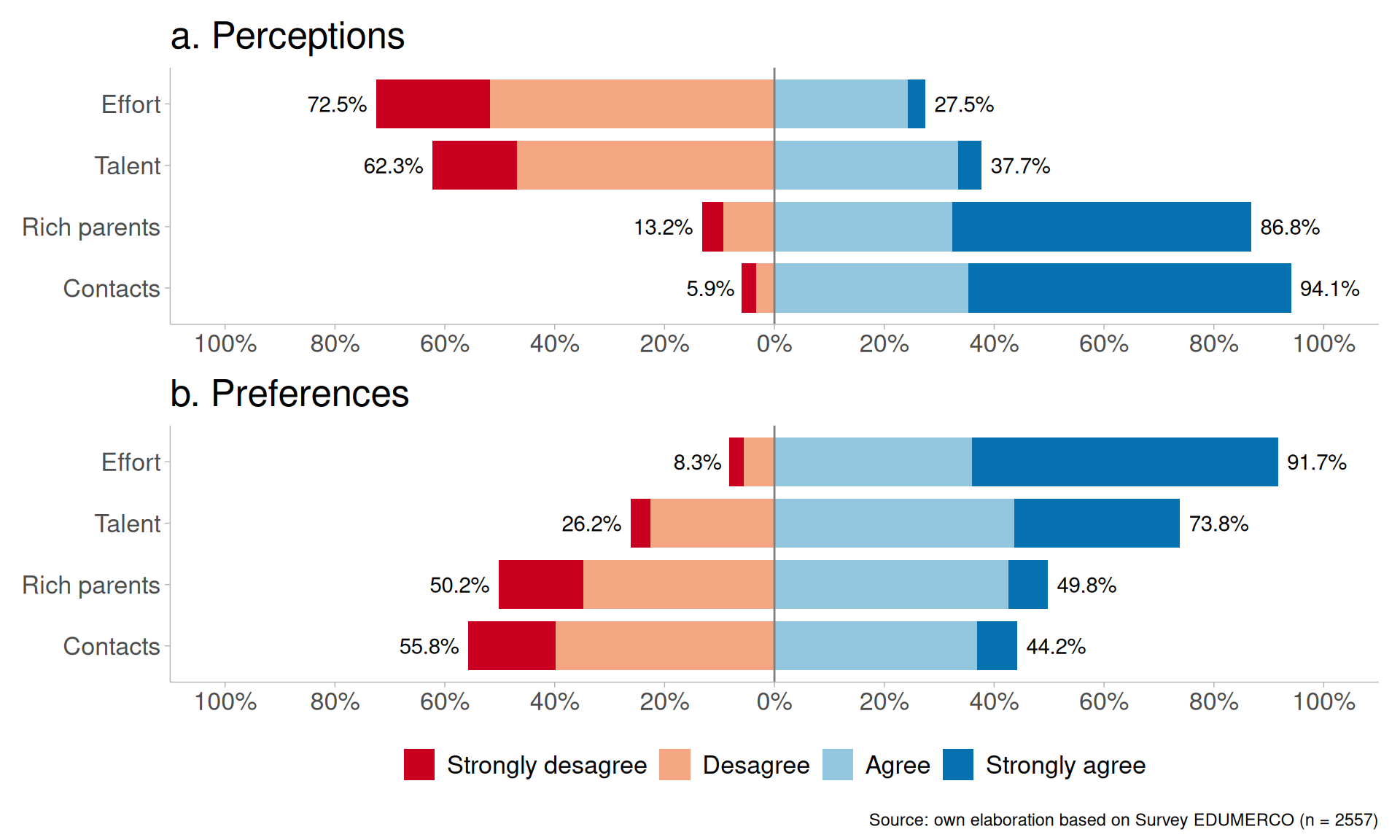
Figure 9: Distribution of responses on the scale of perceptions and preferences regarding meritocracy

Model

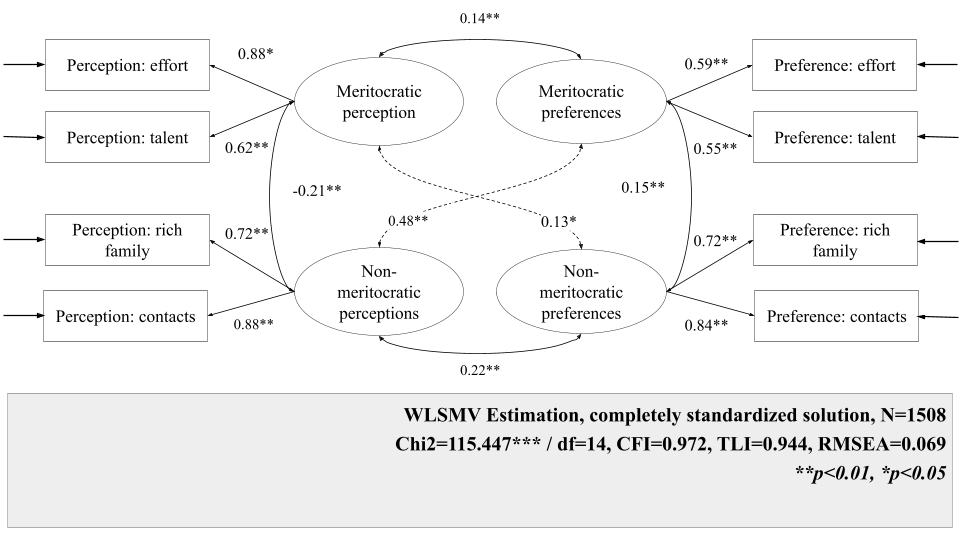
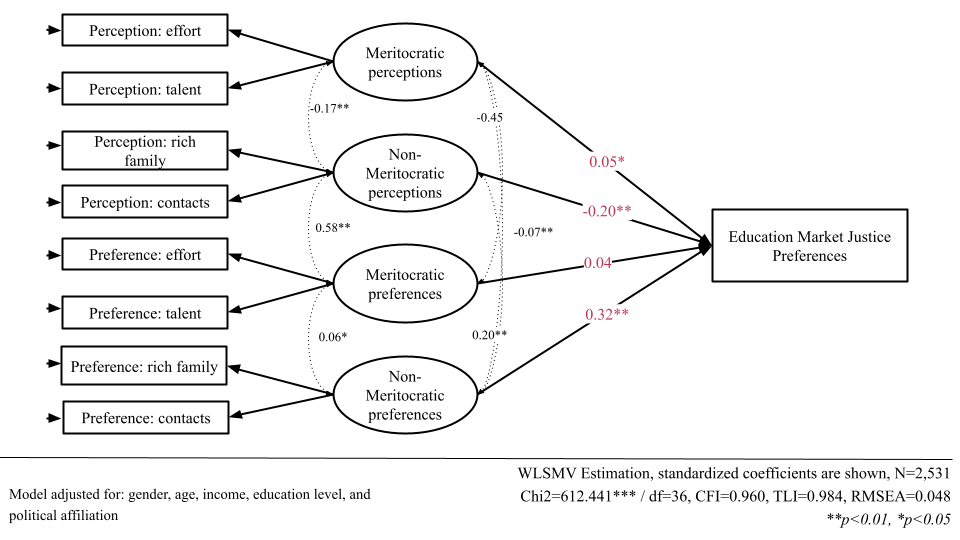
Figure 10: Structural equation model

Preliminary conclusions

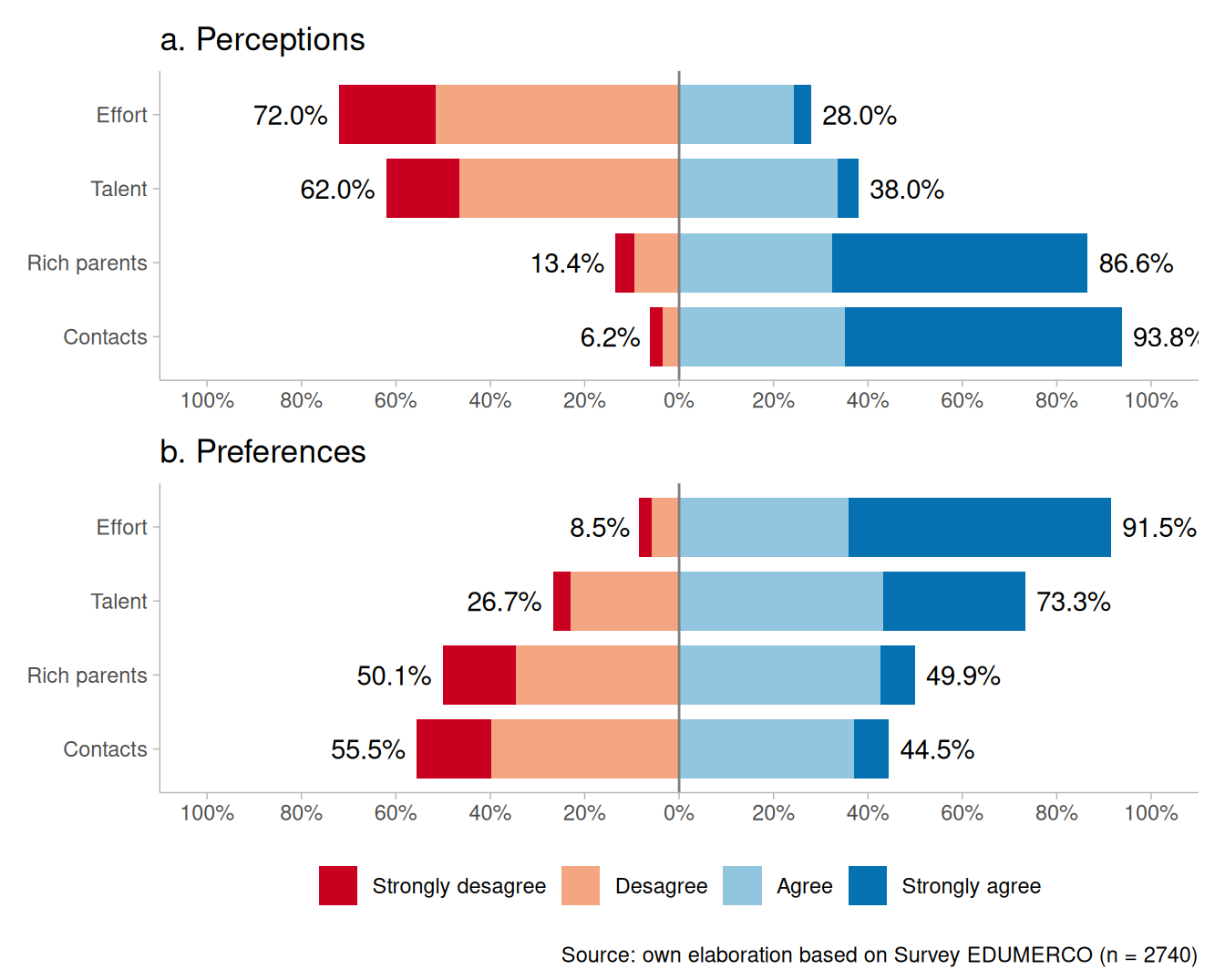
  1. Meritocracy in Chile: Privilege is perceived to outweigh merit, even though merit—especially effort—remains the dominant normative ideal

  2. Measuring meritocracy: Respondents distinguish between perceptions and preferences, as well as between meritocratic and non-meritocratic principles

  3. Meritocracy and pension market justice: Support is strongest among those willing to normalize privilege within a fair distributive order

Discussion and conclusions

Discussion and conclusions

  1. Research agenda: The expansion of market-based welfare is reflected in public attitudes (Busemeyer & Iversen, 2020; Lindh, 2015), helping explain support for neoliberal arrangements (Mau, 2015)

  2. Chile: Support remains minority but is rising over time, consistent with longitudinal evidence from a highly commodified welfare context marked by mixed policy feedback (Castillo et al., 2025)

  3. Main result: Effort-based meritocratic perceptions are positively associated with pension market justice, both between and within individuals

  4. Extension: With a multidimensional measure of meritocracy (Castillo et al., 2023), support is highest among those who normatively accept non-meritocratic advantage, while perceiving society as non-meritocratic lowers it

Next steps

  • Market justice measurement: We are refining the measure and extending it to additional welfare domains

  • Class measurement: Despite the null findings, we do not abandon the argument that objective stratification shapes these preferences; we will test alternative measures of class and inequality

  • Next analyses: We will further examine how meritocratic deservingness relates to market justice in pensions, health, and education using latent class analysis and comparative ISSP data, with attention to institutional and economic cross-national differences

Contents

  • The project
  • Paper market justice in pensions
  • Paper factorial invariance of merit scale
  • Latent Class Analysis of merit scale

Research problem

Context and motivation

Context and motivation

Research gaps and contributions

  • The measurement of meritocratic beliefs remains limited in school-based research

  • Existing scales are still narrow: BSM (Wiederkehr et al., 2015) focuses mainly on effort and opportunity, while Chauvin et al. (2026) centers on perceived meritocracy and blends school with broader social meritocracy

  • These limitations matter because measurement shapes the validity and interpretation of findings

  • We address this gap with a multidimensional approach (Castillo et al., 2023) that distinguishes perceptions from preferences, and meritocratic from non-meritocratic principles

Research gaps and contributions

  • Beyond factorial validity, we test measurement stability across school stages and over time

  • Measurement invariance is necessary for valid group and longitudinal comparisons (Chen, 2007; Putnick & Bornstein, 2016)

  • These cohorts capture distinct stages of adolescence, when beliefs about justice and inequality become more complex and school sorting more salient (Henry & Saul, 2006; Resh & Sabbagh, 2014)

  • This lets us assess whether meritocratic beliefs remain stable or shift as students encounter the limits of meritocratic ideals (Tang et al., 2025)

This study

  1. We ask whether students distinguish between meritocratic and non-meritocratic principles, and between perceptions (“what is”) and preferences (“what should be”)

  2. We also ask whether these dimensions can be measured comparably across age cohorts and over time

  • \(H1\): Meritocratic beliefs are best represented by the four factors

  • \(H2–H3\): This four-factor model is invariant across cohorts and longitudinally within students

Method

Participants and procedure

  • Panel Survey on Education and Meritocracy (EDUMER), using the 2023 and 2024 student waves

  • CAWI surveys administered to primary and secondary school students from 9 schools in the Metropolitan and Valparaíso regions of Chile

  • Wave 1 (N = 846): 386 girls, 421 boys, and 39 identifying as other; \(M_{age}\) = 13.4, \(SD_{age}\) = 1.6

  • Wave 2 (N = 662): 303 girls, 338 boys, and 21 identifying as other; \(M_{age}\) = 14.4, \(SD_{age}\) = 1.6

  • Attrition: 22% (78% retention), mainly due to school absenteeism and school transfers

Measures

Figure 11: Scale of Perceptions and Preferences of Meritocracy

Measures

  • Cohorts: To distinguish educational level across waves in the invariance analyses, we use a cohort indicator defined at each wave (primary vs. secondary school).
Table 1: Descriptive statistics for cohort level
Age
Gender
Wave Cohort level N Mean SD Man Women Others
Wave 1 Primary 406 11.85 0.56 195 191 20
Secondary 440 14.79 0.80 226 195 19
Total 846 13.38 1.63 421 386 39
Wave 2 Primary 319 12.83 0.55 161 145 13
Secondary 343 15.76 0.75 177 158 8
Total 662 14.35 1.61 338 303 21

Analytical strategy

  • Confirmatory Factor Analysis (CFA):

    • A four-factor latent model estimated with WLSMV (Kline, 2023)
    • Model fit cutoffs (Brown, 2015): \(\text{CFI or TLI} > 0.95\); \(RMSEA < 0.06\); nonsignificant \(\chi^2\) (\(p > 0.05\)), and \(\chi^2/df < 3\)

Analytical strategy

  • Measurement invariance: a set of procedures used to assess the comparability of a measurement model (Putnick & Bornstein, 2016; Van De Schoot et al., 2015)

  • Two types:

    • Between cohorts (primary vs. secondary school) –> Davidov et al. (2014)
    • Longitudinal (two waves; within individuals) –> Y. Liu et al. (2017)
  • Procedure: four sequentially constrained, hierarchical models

    • Configural (same factor structure)
    • Weak (+ equal factor loadings)
    • Strong (+ equal intercepts)
    • Strict (+ equal error variances)
    • Fit cutoffs (Chen, 2007): CFI (\(\Delta \geq -0.010\)) and RMSEA (\(\Delta \geq 0.0\))

Results

Measurement model

Figure 12: Multigroup model diagram

Longitudinal descriptives

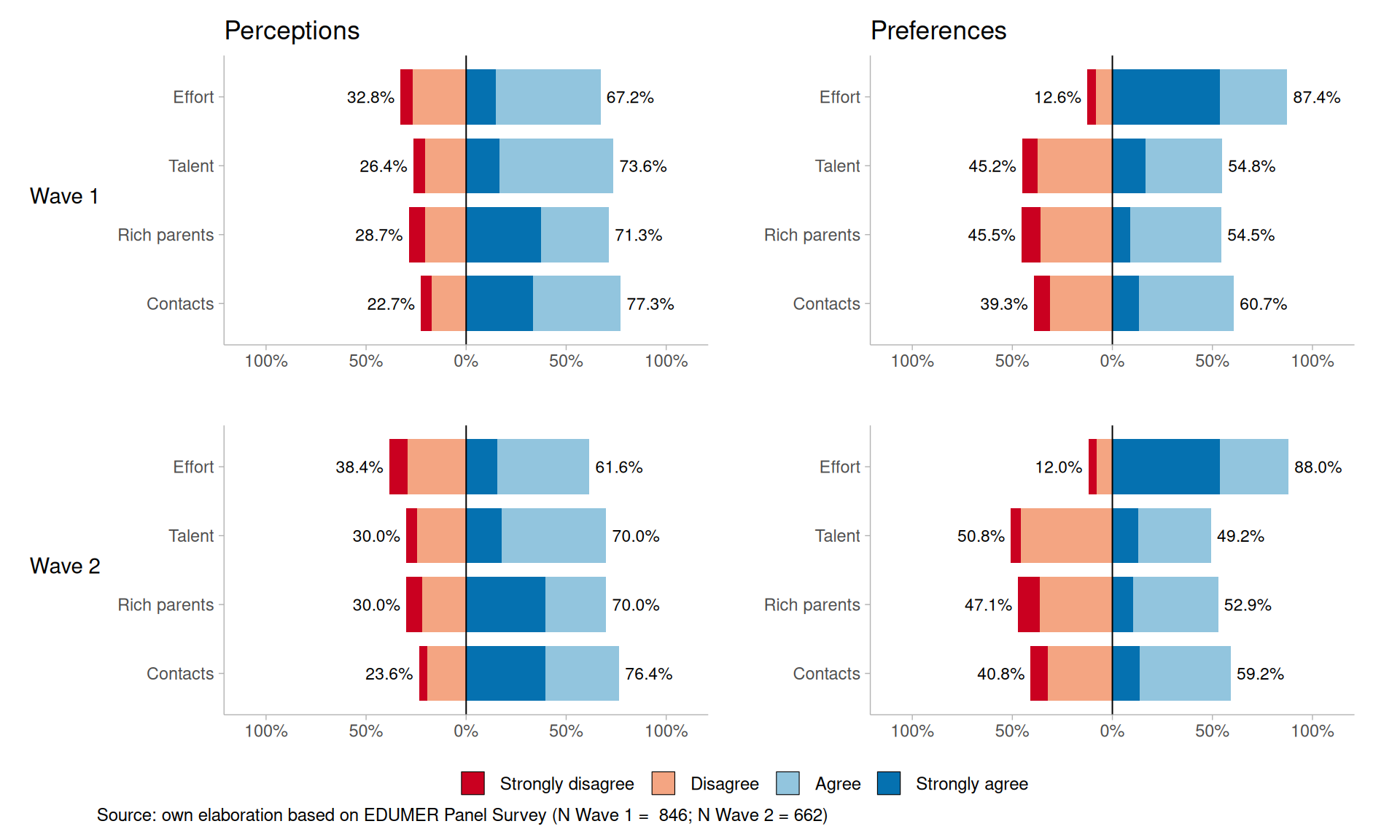
Figure 13: Distribution of responses on the scale of perceptions and preferences regarding meritocracy by wave

Longitudinal invariance

Table 2: Longitudinal invariance results
Model χ^2 (df) CFI RMSEA (90% CI) Δ χ^2 (Δ df) Δ CFI Δ RMSEA Decision
Configural 117.7 (68) 0.991 0.035 (0.024-0.046) 0 (0) 0 0.000 Reference
Weak 122.51 (72) 0.990 0.034 (0.024-0.045) 4.809 (4) 0 -0.001 Accept
Strong 128.53 (80) 0.991 0.032 (0.021-0.042) 6.02 (8) 0 -0.002 Accept
Strict 130.17 (84) 0.991 0.031 (0.02-0.04) 1.635 (4) 0 -0.002 Accept

Cohort descriptives

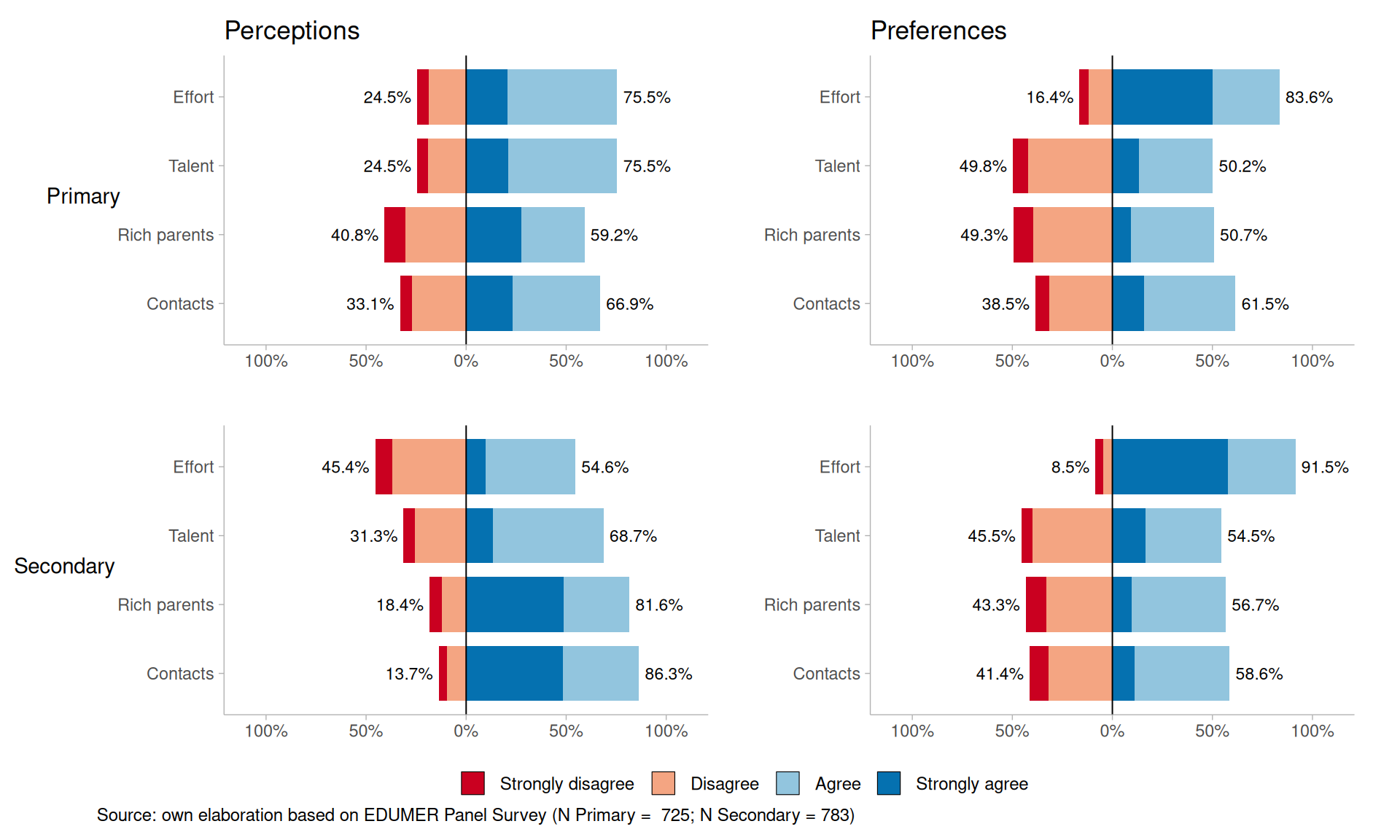
Figure 14: Distribution of responses on the scale of perceptions and preferences regarding meritocracy by cohort

Cohort invariance

Table 3: Cohort (multigroup) invariance results
Model χ^2 (df) CFI RMSEA (90% CI) Δ χ^2 (Δ df) Δ CFI Δ RMSEA Decision
Configural 24.95 (26) 0.993 0.036 (0.009-0.057) 0 (0) 0.000 0.000 Reference
Tresholds 57.56 (42) 0.980 0.049 (0.033-0.064) 43.875 (16) *** -0.013 0.013 Reject
Tresholds + Loadings 72.35 (46) 0.973 0.053 (0.039-0.067) 17.075 (4) ** -0.006 0.005 Reject

Cross-cohort non-invariance is mainly driven by the perceived-effort item, suggesting that older students apply a more critical standard when judging whether effort is rewarded.

Discussion and conclusions

Discussion: meritocracy at schools

  • \(H1\) is supported: students already organize meritocratic beliefs into four distinct dimensions

  • They distinguish both between “what is” and “what should be,” and between merit and privilege

  • Merit and non-merit do not work as opposites: recognizing privilege does not eliminate support for merit (Jonathan J. B. Mijs, 2026; Tang et al., 2025)

  • This suggests that the link between meritocratic beliefs and inequality legitimization is likely dimension-specific (Castillo et al., 2023)

Discussion: measurement invariance

  • \(H2\) is supported: the scale is longitudinally stable, so within-student change over time can be interpreted substantively

    • This strengthens the basis for studying developmental change in meritocratic beliefs
  • \(H3\) is not supported: the scale is not fully invariant across educational levels

    • Perceived meritocracy seems to shift across school stages, suggesting that older students see effort as less clearly rewarded than younger students do (Tang et al., 2025)

Next steps

  1. Future research should refine the measure and examine how these beliefs shape school experiences, inequality legitimization, and attitudes toward educational opportunity

  2. Start from the items’ covariance structure, and assess whether their relationships form distinguishable clusters.

Contents

  • The project
  • Paper market justice in pensions
  • Paper factorial invariance of merit scale
  • Latent Class Analysis of merit scale

So far

  • Meritocracy as factor associated: relationships with market justice preferences, redistributive preferences and perceptions of inequality.

  • Measurement of meritocracy: developed scale that allows for an understanding of meritocratic beliefs from a multidimensional approach

  • Key findings

    • Meritocracy is not one-dimensional

    • Nor does it follow a continuous logic

  • Blind spots

    • Variable-centered instead of person-centered approaches

    • It is not possible to determine whether people hold different meritocratic beliefs and how they form groups based on their similarities and differences

Objective of this paper


Examine the patterns of meritocratic and non-meritocratic beliefs and identify different groups and their size based on the meritocratic beliefs configurations

Data

  • Dataset: EDUMERCO (2024)

  • Online survey (CAWI) applied to Adults in the Metropolitan Region of Chile

  • Sampling: Non-probability quota-based design

  • Analytical sample: N = 2,740

Method

  • Latent Class Analysis (LCA): It is a statistical method that models the relationships between observed variables based on the assumption that an unobserved categorical latent variable explains their underlying structure

  • LCA is specifically used for studies involving categorical or ordinal variables

  • Exploratory and confirmatory utility

    • allows for the identification of different types of groups based on the probability that they will give similar responses

    • allows for the testing of hypotheses regarding the number and size of existing groups in society

Parameters and estimation

  • Parameters

    • Class probability: Indicates the probability of belonging to each class and reflects the relative size of the group

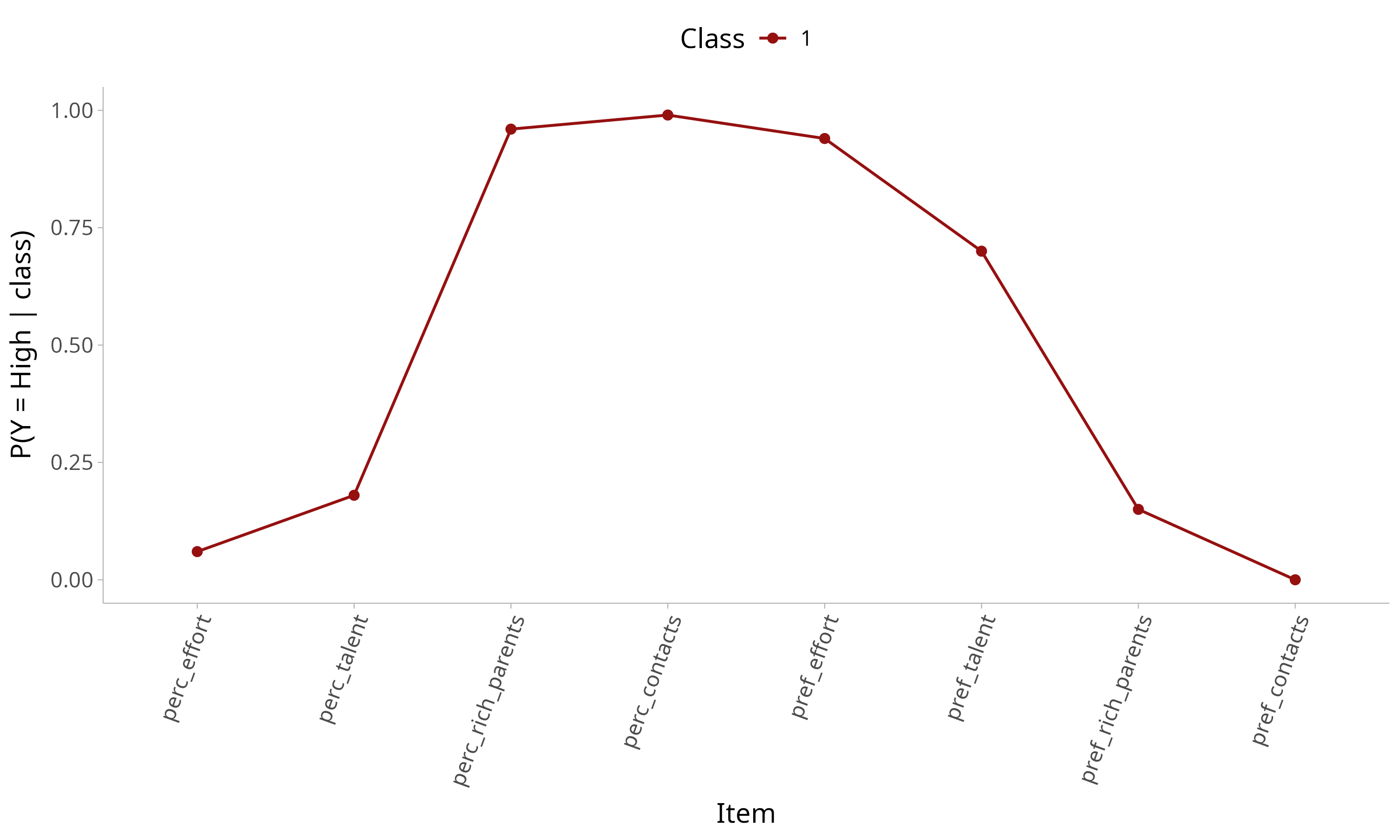
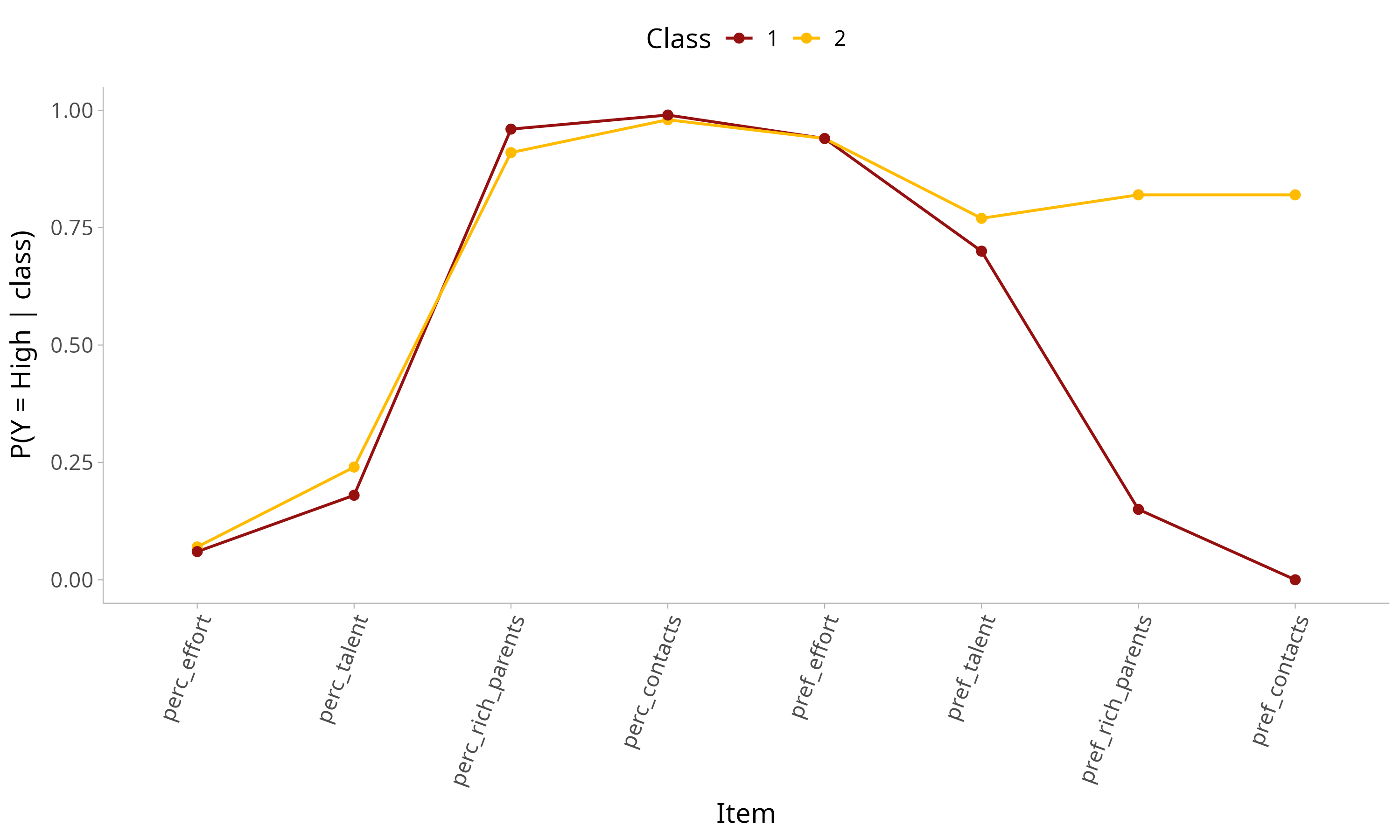
    • Conditional response probabilities: These indicates the probability of endorsing a particular response category, given membership in a latent class. These parameters are used to interpret and label the classes.


  • Estimation and fit

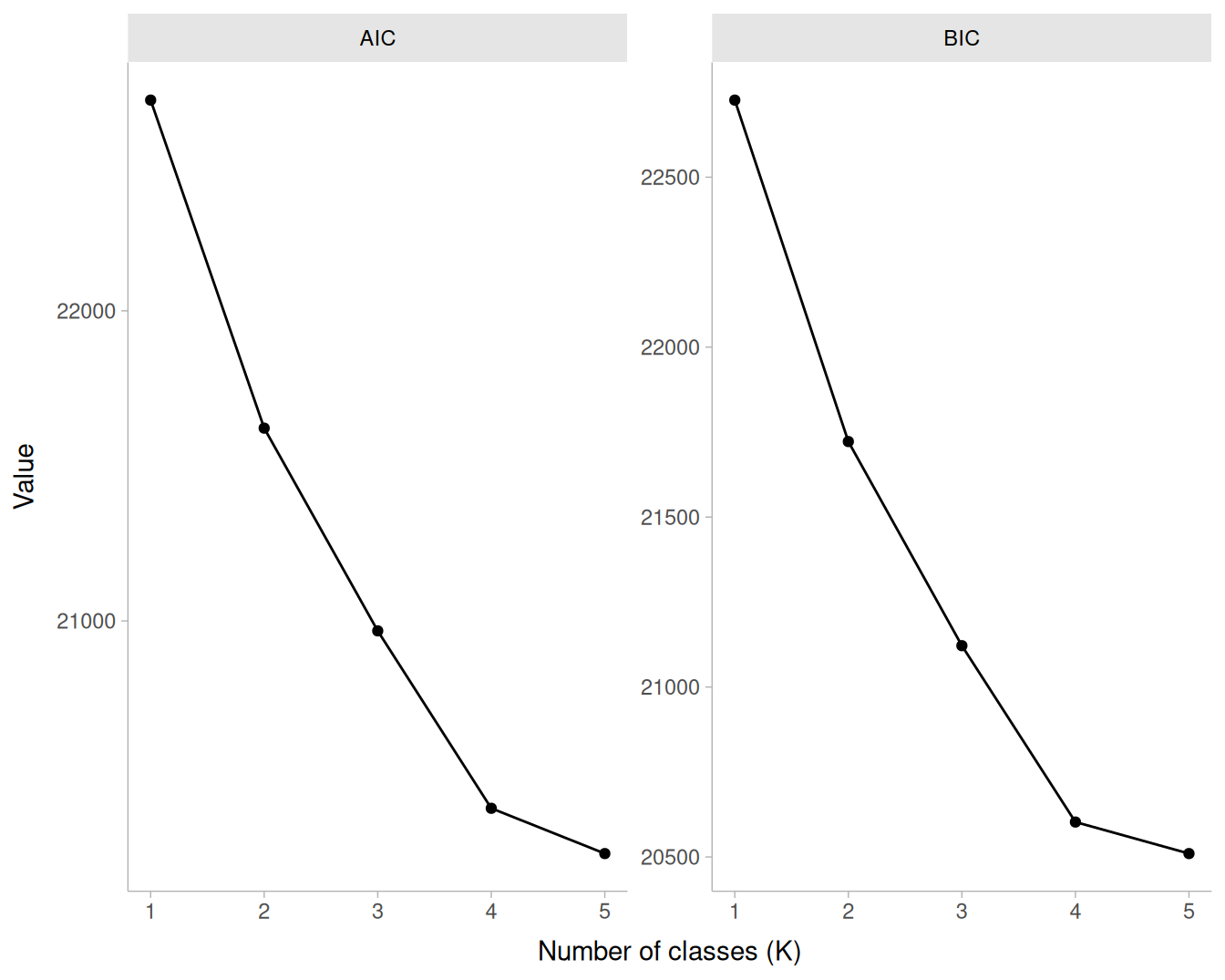
    • Bayesian Information Criteria (BIC)
    • Akaike Information Criteria (AIC)

Results

Figure 15: Distribution of responses on the scale of perceptions and preferences regarding meritocracy

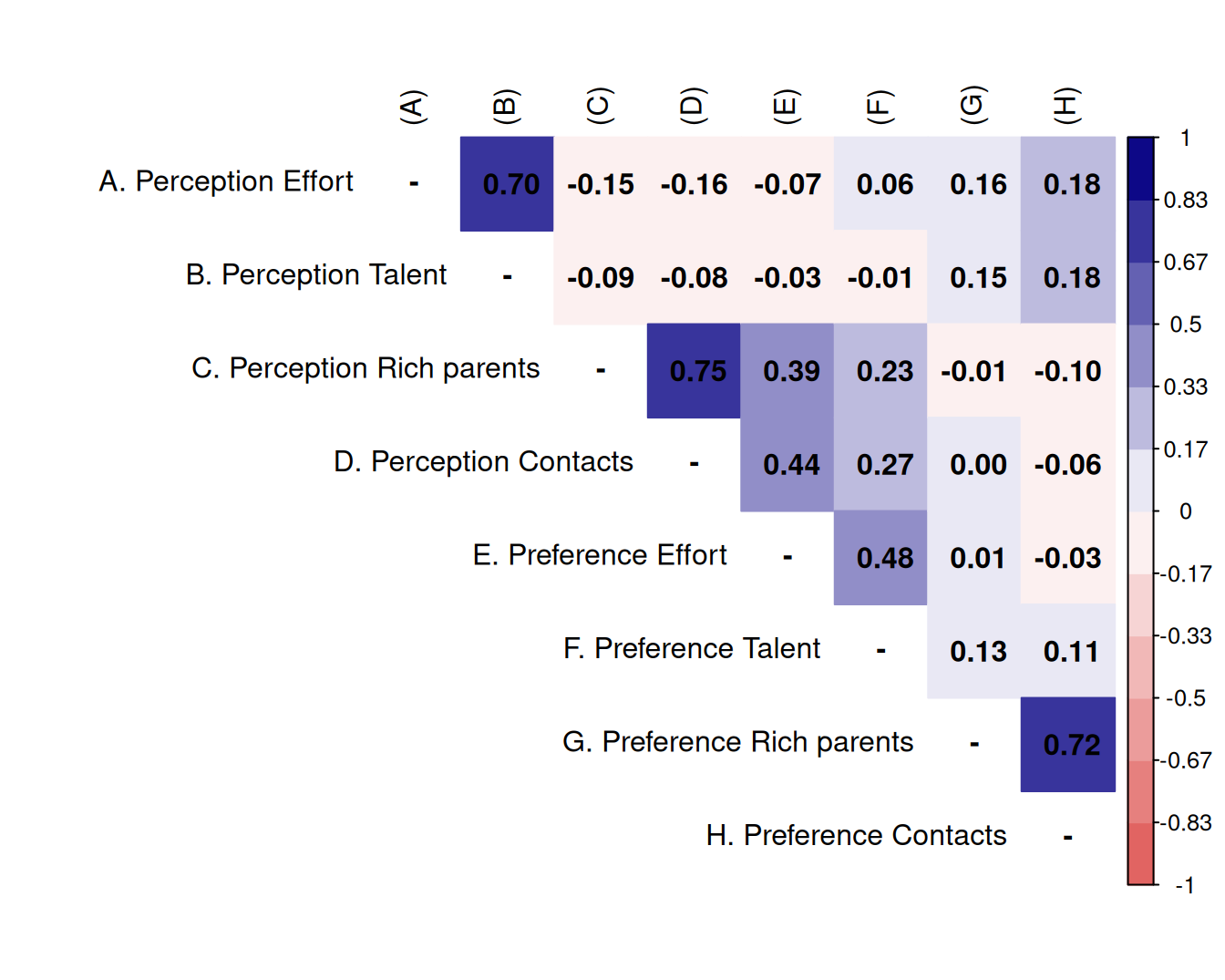
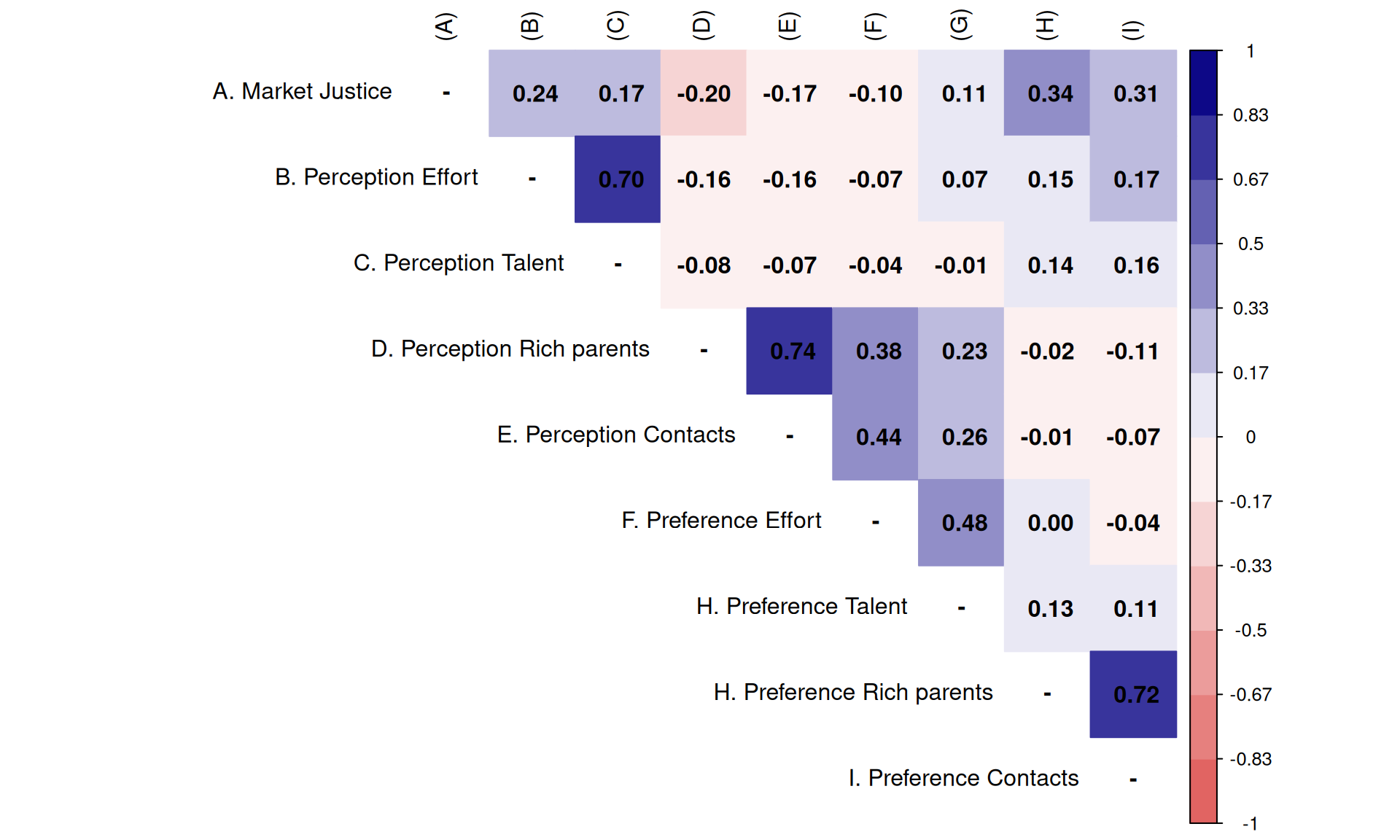
Figure 16: Correlation matrix

Figure 17: AIC/BIC by K

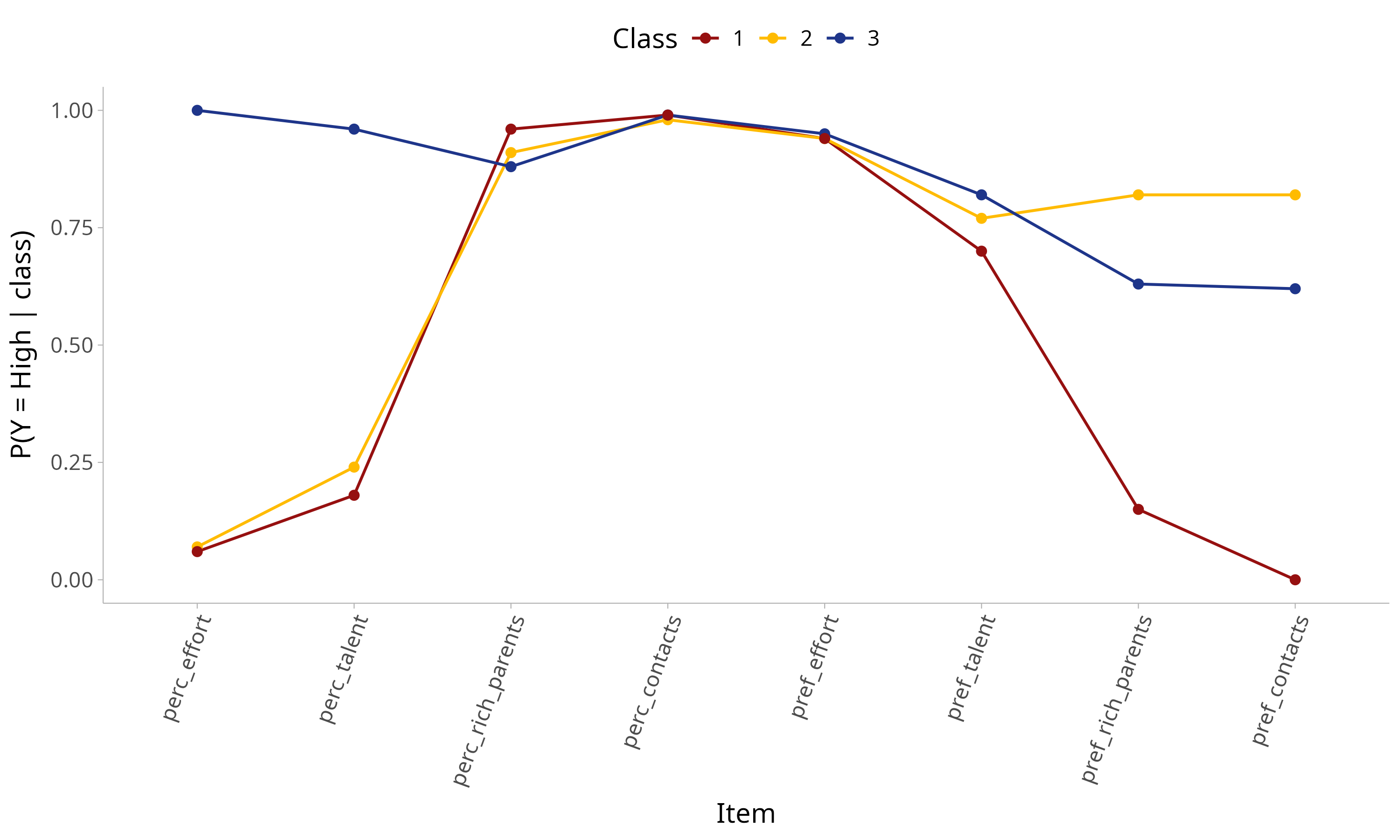
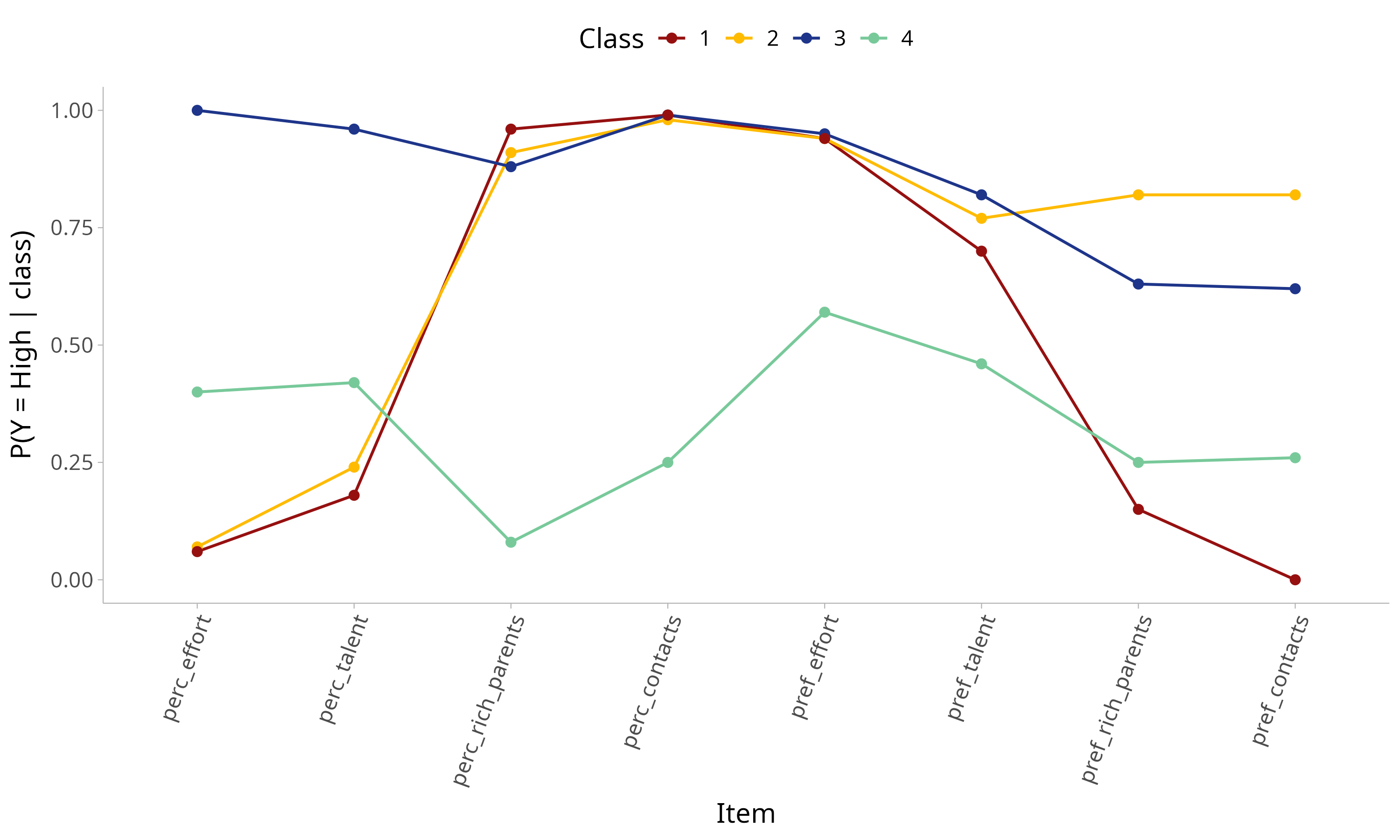
Figure 18: Conditional probabilities of the 4-class solution
  • Class 1 Critical Meritocrats (36.2%): This group is characterized by its belief in meritocracy as a moral ideal, while acknowledging that, in reality, certain privileges influence success. It does not consider the current system to be meritocratic, but it strongly advocates for it to be so

Figure 19: Conditional probabilities of the 4-class solution
  • Class 2: Anything goes (36.3%): This class combines a realistic assessment of a stratified society with a normative justification of privilege. Thus, meritocracy is not presented as an alternative to privilege; rather, the two principles coexist and are viewed as compatible foundations for the functioning of society.

Figure 20: Conditional probabilities of the 4-class solution
  • Class 3 Structurally Aware Meritocrats (20.7%): This profile reflects a belief system in which merit and privilege operate simultaneously. They strongly support meritocracy, though they hold an ambivalent stance toward privilege: they view it as less legitimate than other groups do, but they do not reject it entirely

Figure 21: Conditional probabilities of the 4-class solution
  • Class 4 Neutral naives (6.8%): This group exhibits an ambivalent character as they do not strongly support meritocracy neither non-meritocracy

Next steps

  • Delving deeper into the interpretation of the lessons: find a more substantive explanation for the ambivalent class and connecting the findings to the literature


  • Estimate regressions using latent classes as independent variables to predict support for market-based justice in social services

Thanks you for your attention

References

Batruch, A., Jetten, J., Van de Werfhorst, H., Darnon, C., & Butera, F. (2022). Belief in School Meritocracy and the Legitimization of Social and Income Inequality. Social Psychological and Personality Science, 194855062211110. https://doi.org/10.1177/19485506221111017
Bell, A., Fairbrother, M., & Jones, K. (2019). Fixed and random effects models: Making an informed choice. Quality & Quantity, 53(2), 1051–1074. https://doi.org/10.1007/s11135-018-0802-x
Bell, D. (1972). On equality: I. Meritocracy and equality. The Public Interest, 29, 29–68.
Boccardo, G. (2020). 30 años de privatizaciones en Chile: Lo que la pandemia reveló. Nodo XXI.
Brown, T. A. (2015). Confirmatory factor analysis for applied research (Second edition). New York London: The Guilford Press.
Busemeyer, M. (2015). Skills and inequality: Partisan politics and the political economy of education reforms in western welfare states. Cambridge: Cambridge University Press. https://doi.org/10.1017/CBO9781107477650
Busemeyer, M., & Iversen, T. (2020). The Welfare State with Private Alternatives: The Transformation of Popular Support for Social Insurance. The Journal of Politics, 82(2), 671–686. https://doi.org/10.1086/706980
Campbell, J. L. (2020). Institutional Change and Globalization. Princeton University Press. https://doi.org/10.2307/j.ctv131bw68
Canales Cerón, M., Orellana Calderón, V. S., & Guajardo Mañán, F. (2021). Sujeto y cotidiano en la era neoliberal: El caso de la educación chilena. Revista Mexicana de Ciencias Políticas y Sociales, 67(244). https://doi.org/10.22201/fcpys.2448492xe.2022.244.70386
Castillo, J. C., Iturra, J., Maldonado, L., Atria, J., & Meneses, F. (2023). A Multidimensional Approach for Measuring Meritocratic Beliefs: Advantages, Limitations and Alternatives to the ISSP Social Inequality Survey. International Journal of Sociology, 53(6), 448–472. https://doi.org/10.1080/00207659.2023.2274712
Castillo, J. C., Laffert, A., Carrasco, K., & Iturra-Sanhueza, J. (2025). Perceptions of inequality and meritocracy: Their interplay in shaping preferences for market justice in Chile (2016–2023). Frontiers in Sociology, 10, 1634219. https://doi.org/10.3389/fsoc.2025.1634219
Castillo, J. C., Salgado, M., Carrasco, K., & Laffert, A. (2024). The Socialization of Meritocracy and Market Justice Preferences at School. Societies, 14(11), 214. https://doi.org/10.3390/soc14110214
Castillo, J. C., Torres, A., Atria, J., & Maldonado, L. (2019). Meritocracia y desigualdad económica: Percepciones, preferencias e implicancias. Revista Internacional de Sociología, 77(1), 117. https://doi.org/10.3989/ris.2019.77.1.17.114
Chauvin, B., Rauscher, C., Saidah, B., & Louvet, E. (2026). School meritocracy: A multidimensional construct? Evidence from the development of a school meritocracy scale by exploratory and confirmatory bifactor modeling. Current Psychology, 45(5), 519. https://doi.org/10.1007/s12144-026-09134-1
Chen, F. F. (2007). Sensitivity of Goodness of Fit Indexes to Lack of Measurement Invariance. Structural Equation Modeling: A Multidisciplinary Journal, 14(3), 464–504. https://doi.org/10.1080/10705510701301834
Darnon, C., Jury, M., Goudeau, S., & Portex, M. (2023). Competitive and cooperative practices in education: How teachers’ beliefs in school meritocracy are related to their daily practices with students. Social Psychology of Education, 26(6), 1789–1805. https://doi.org/10.1007/s11218-023-09824-9
Darnon, C., Smeding, A., & Redersdorff, S. (2018). Belief in school meritocracy as an ideological barrier to the promotion of equality. European Journal of Social Psychology, 48(4), 523–534. https://doi.org/10.1002/ejsp.2347
Darnon, C., Wiederkehr, V., Dompnier, B., & Martinot, D. (2018). Where there is a will, there is a way”: Belief in school meritocracy and the social-class achievement gap. British Journal of Social Psychology, 57(1), 250–262. https://doi.org/10.1111/bjso.12214
Davidov, E., Meuleman, B., Cieciuch, J., Schmidt, P., & Billiet, J. (2014). Measurement Equivalence in Cross-National Research. Annual Review of Sociology, 40(Volume 40, 2014), 55–75. https://doi.org/10.1146/annurev-soc-071913-043137
Fernandez, J. J., & Jaime-Castillo, A. M. (2013). Positive or Negative Policy Feedbacks? Explaining Popular Attitudes Towards Pragmatic Pension Policy Reforms. European Sociological Review, 29(4), 803–815. https://doi.org/10.1093/esr/jcs059
Ferre, J. C. (2023). Welfare regimes in twenty-first-century Latin America. Journal of International and Comparative Social Policy, 39(2), 101–127. https://doi.org/10.1017/ics.2023.16
Flores, I., Sanhueza, C., Atria, J., & Mayer, R. (2020). Top Incomes in Chile: A Historical Perspective on Income Inequality, 1964–2017. Review of Income and Wealth, 66(4), 850–874. https://doi.org/10.1111/roiw.12441
García-Sierra, A. (2023). The dark side of meritocratic beliefs: Is believing in meritocracy detrimental to individuals from low socioeconomic backgrounds? Social Justice Research, 36(4), 385–409. https://doi.org/10.1007/s11211-023-00413-x
Gingrich, J. R. (2011). Making Markets in the Welfare State: The Politics of Varying Market Reforms (1st ed.). Cambridge University Press. https://doi.org/10.1017/CBO9780511791529
Goudeau, S., & Cimpian, A. (2021). How Do Young Children Explain Differences in the Classroom? Implications for Achievement, Motivation, and Educational Equity. Perspectives on Psychological Science, 16(3), 533–552. https://doi.org/10.1177/1745691620953781
Henry, P. J., & Saul, A. (2006). The Development of System Justification in the Developing World. Social Justice Research, 19(3), 365–378. https://doi.org/10.1007/s11211-006-0012-x
Heuer, J.-O., Lux, T., Mau, S., & Zimmermann, K. (2020). Legitimizing Inequality: The Moral Repertoires of Meritocracy in Four Countries. Comparative Sociology, 19(4-5), 542–584. https://doi.org/10.1163/15691330-BJA10017
Immergut, E. M., & Schneider, S. M. (2020). Is it unfair for the affluent to be able to purchase “better” healthcare? Existential standards and institutional norms in healthcare attitudes across 28 countries. Social Science & Medicine, 267, 113146. https://doi.org/10.1016/j.socscimed.2020.113146
Kerner, A. (2020). Pension Returns and Popular Support for Neoliberalism in Post-Pension Reform Latin America. British Journal of Political Science, 50(2), 585–620. https://doi.org/10.1017/S0007123417000710
Kline, R. B. (2023). Principles and Practice of Structural Equation Modeling. Guilford Publications.
Kluegel, J., Mason, D., & Wegener, B. (1999). The Legitimation of Capitalism in the Postcommunist Transition: Public Opinion about Market Justice, 1991-1996. European Sociological Review, 15(3), 33. Retrieved from https://www.jstor.org/stable/522731
Koos, S., & Sachweh, P. (2019). The moral economies of market societies: Popular attitudes towards market competition, redistribution and reciprocity in comparative perspective. Socio-Economic Review, 17(4), 793–821. https://doi.org/10.1093/ser/mwx045
Lane, R. E. (1986). Market Justice, Political Justice. American Political Science Review, 80(2), 383–402. https://doi.org/10.2307/1958264
Lee, J.-S., & Stacey, M. (2024). Fairness perceptions of educational inequality: The effects of self-interest and neoliberal orientations. The Australian Educational Researcher, 51(4), 1215–1237. https://doi.org/10.1007/s13384-023-00636-6
Lindh, A. (2015). Public Opinion against Markets? Attitudes towards Market Distribution of Social ServicesA Comparison of 17 Countries. Social Policy & Administration, 49(7), 887–910. https://doi.org/10.1111/spol.12105
Liu, C., & Wang, J. (2025). Does Education Legitimise Inequality? Comparative Analysis of Income Inequality, Education, and Meritocratic Beliefs. The British Journal of Sociology, 1468–4446.70029. https://doi.org/10.1111/1468-4446.70029
Liu, Y., Millsap, R. E., West, S. G., Tein, J.-Y., Tanaka, R., & Grimm, K. J. (2017). Testing measurement invariance in longitudinal data with ordered-categorical measures. Psychological Methods, 22(3), 486–506. https://doi.org/10.1037/met0000075
Llorca-Jaña, M., & Miller, R. M. D. (2021). Historia económica de Chile desde la independencia. Santiago de Chile: RIL editores.
López-Roldán, P., & Fachelli, S. (Eds.). (2021). Towards a Comparative Analysis of Social Inequalities between Europe and Latin America. Cham: Springer International Publishing. https://doi.org/10.1007/978-3-030-48442-2
Madariaga, A. (2020). The three pillars of neoliberalism: Chile’s economic policy trajectory in comparative perspective. Contemporary Politics, 26(3), 308–329. https://doi.org/10.1080/13569775.2020.1735021
Mau, S. (2015). Inequality, Marketization and the Majority Class: Why Did the European Middle Classes Accept Neo-Liberalism? London: Palgrave Macmillan UK.
Mijs, J. (2016). The Unfulfillable Promise of Meritocracy: Three Lessons and Their Implications for Justice in Education. Social Justice Research, 29(1), 14–34. https://doi.org/10.1007/s11211-014-0228-0
Mijs, Jonathan J. B. (2021). The paradox of inequality: Income inequality and belief in meritocracy go hand in hand. Socio-Economic Review, 19(1), 7–35. https://doi.org/10.1093/ser/mwy051
Mijs, Jonathan J. B. (2026). Visualizing Belief in Merit and Privilege, 1930 to 2020: Rejoinder. Socius, 12, 23780231261426413. https://doi.org/10.1177/23780231261426413
Putnick, D. L., & Bornstein, M. H. (2016). Measurement invariance conventions and reporting: The state of the art and future directions for psychological research. Developmental Review, 41, 71–90. https://doi.org/10.1016/j.dr.2016.06.004
Resh, N., & Sabbagh, C. (2014). Sense of justice in school and civic attitudes. Social Psychology of Education, 17(1), 51–72. https://doi.org/10.1007/s11218-013-9240-8
Resh, N., & Sabbagh, C. (2017). Sense of justice in school and civic behavior. Social Psychology of Education, 20(2), 387–409. https://doi.org/10.1007/s11218-017-9375-0
Sandel, M. J. (2020). The Tyranny of Merit: What’s Become of the Common Good? Penguin UK.
Somma, N. M., Bargsted, M., Disi Pavlic, R., & Medel, R. M. (2021). No water in the oasis: The Chilean Spring of 2019–2020. Social Movement Studies, 20(4), 495–502. https://doi.org/10.1080/14742837.2020.1727737
Streeck, W. (2016). How will capitalism end? Essays on a failing system. London New York, NY: Verso.
Superintendencia, de P. (2025). Cuadros de afiliación a AFP.
Svallfors, S. (Ed.). (2007). The Political Sociology of the Welfare State: Institutions, Social Cleavages, and Orientations (1st ed.). Stanford University Press. https://doi.org/10.2307/j.ctvr0qv0q
Tang, M., Li, A., & Wu, X. (2025). Meritocratic Myth in Mind? Socioeconomic Backgrounds and Shifting Beliefs about Meritocracy among College Students in China. Sociology of Education, 00380407251360432. https://doi.org/10.1177/00380407251360432
Torche, F. (2014). Intergenerational Mobility and Inequality: The Latin American Case. Annual Review of Sociology, 40(1), 619–642. https://doi.org/10.1146/annurev-soc-071811-145521
Traini, C. (2022). The stratification of education systems and social background inequality of educational opportunity. International Journal of Comparative Sociology, 63(1-2), 10–29. https://doi.org/10.1177/00207152211033015
Van De Schoot, R., Schmidt, P., De Beuckelaer, A., Lek, K., & Zondervan-Zwijnenburg, M. (2015). Editorial: Measurement Invariance. Frontiers in Psychology, 6. https://doi.org/10.3389/fpsyg.2015.01064
Wiederkehr, V., Bonnot, V., Krauth-Gruber, S., & Darnon, C. (2015). Belief in school meritocracy as a system-justifying tool for low status students. Frontiers in Psychology, 6.
Young, M. (1958). The rise of the meritocracy. New Brunswick, N.J., U.S.A: Transaction Publishers.


Supplementary Material

Bivariate

Figure 22: Correlation matrix between market justice and meritocracy scale

MIMIC Model: Education

Figure 23: MIMIC Model for market justice preferences in education

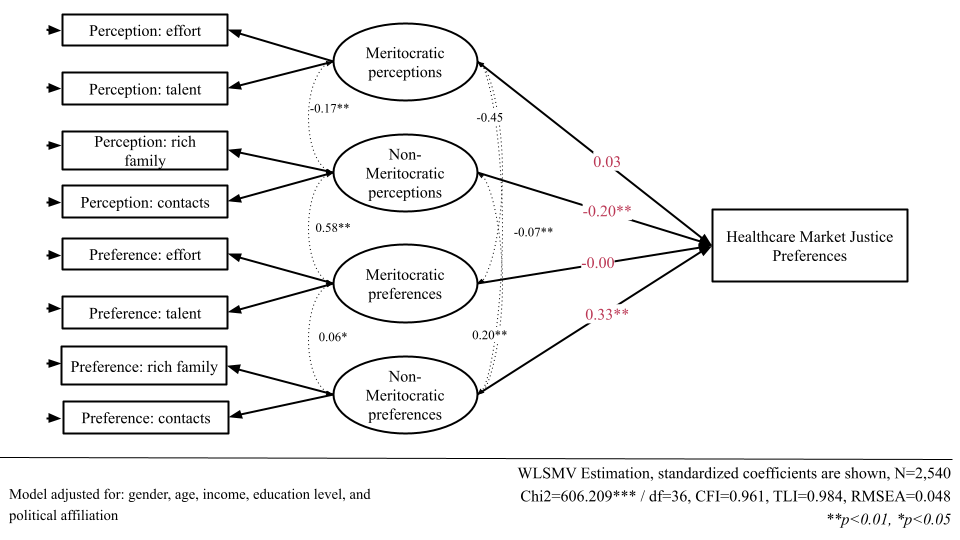
MIMIC Model: Healthcare

Figure 24: MIMIC Model for market justice preferences in healthcare